






What's Happening?
UK stocks experienced a significant downturn on Friday, with the blue-chip FTSE 100 index closing down 1.0 percent at a five-month low of 10,346.34 points, and the mid-cap FTSE 250 index falling 2.2 percent to a four-month low of 23,651.73. This decline
was part of a broader global market selloff, primarily fueled by concerns over the valuations of AI-linked companies and expectations of higher interest rates in the United States. The financial sector was particularly hard hit, with major banks like HSBC, Standard Chartered, Barclays, and NatWest Group seeing their shares drop between 2.5 percent and 5.6 percent. Precious and industrial metal miners also faced substantial losses, on track for a more than 10 percent weekly decline due to softer gold and copper prices. Despite the overall market slump, stronger-than-expected UK retail sales, which rose 0.7 percent in October, offered some limited support.
Why It's Important?
This global market selloff, significantly impacting UK stocks, highlights the interconnectedness of international financial markets and the profound influence of U.S. economic policy and technological trends. Concerns over AI-linked valuations suggest a potential bubble in the tech sector, which could have ripple effects across various industries if a correction occurs. The anticipation of higher U.S. interest rates makes borrowing more expensive, potentially slowing economic growth and reducing corporate profits globally, thus making riskier assets less attractive. For U.S. investors, this indicates a cautious sentiment in global markets, which could lead to capital flight towards safer assets or domestic investments. The decline in banking and mining sectors in the UK reflects a broader economic slowdown and reduced demand for raw materials, signaling potential challenges for global trade and industrial output. The situation underscores the sensitivity of global markets to U.S. monetary policy and the speculative nature of certain high-growth sectors.
What's Next?
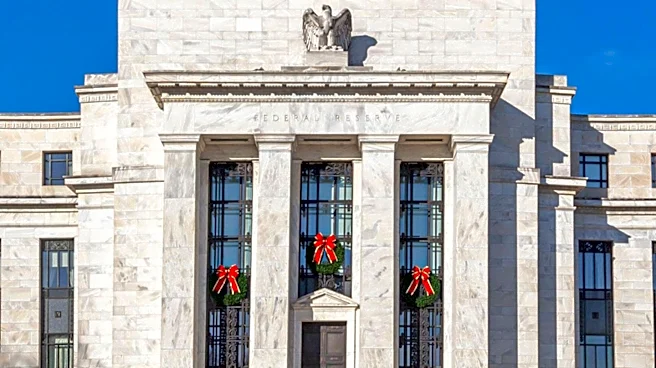
Investors will closely monitor upcoming economic data from the U.S., particularly inflation reports and statements from the Federal Reserve, for further indications on interest rate policy. Any signals of continued rate hikes could prolong the global market downturn. The performance of AI-linked companies will also be under scrutiny, with potential for further corrections if valuation concerns persist. Companies in the financial and mining sectors, both in the UK and globally, may face continued pressure, potentially leading to reduced investment and job cuts. The broader implications for the U.S. economy include a potential slowdown in export demand if global economic activity weakens. Market volatility is likely to continue as investors navigate these uncertainties, with a focus on risk management and diversification.
Beyond the Headlines
The current market dynamics reveal a deeper tension between technological innovation and economic stability. The rapid ascent of AI-linked valuations, while reflecting genuine technological advancements, also raises questions about speculative bubbles reminiscent of past tech booms. The influence of U.S. interest rate policy on global markets underscores the dollar's continued role as a benchmark currency and the U.S. economy's outsized impact on international finance. This situation also highlights the challenges faced by central banks in balancing inflation control with economic growth, particularly in a globally integrated financial system. The selloff could trigger a re-evaluation of investment strategies, pushing capital towards more fundamentally sound assets and away from speculative ventures, potentially reshaping the landscape of global investment flows.