

What's Happening?
Walt Disney World has increasingly moved away from developing major new attractions based on original intellectual property (IP), a significant departure from its historical approach. For decades, Disney Imagineers created rides like Pirates of the Caribbean,
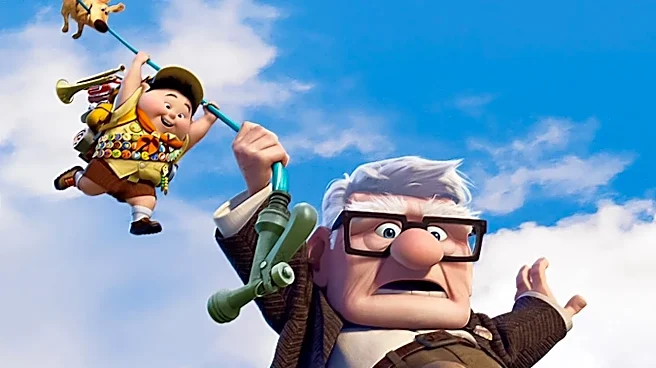
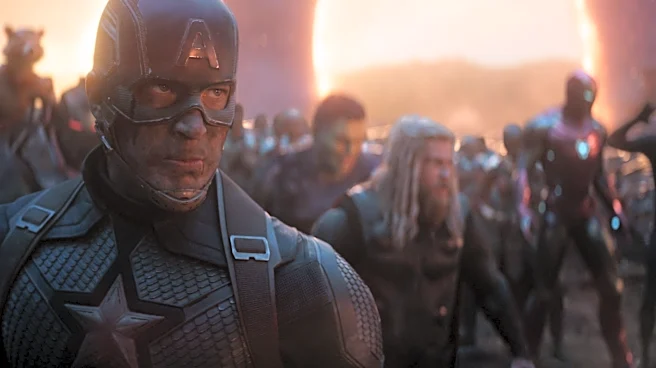
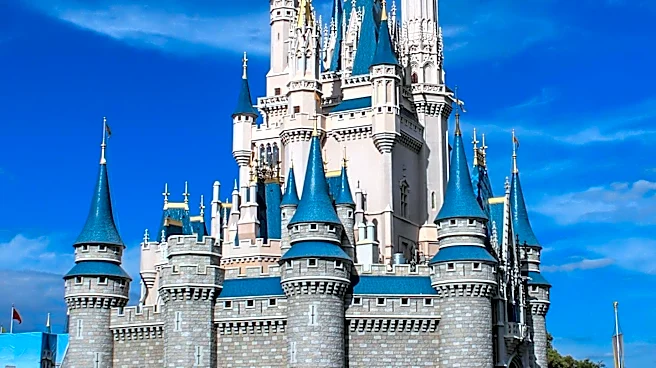
Haunted Mansion, and Expedition Everest, which introduced entirely new stories and characters to guests. However, the trend has shifted, with most prominent new attractions now being built around established Disney, Pixar, Marvel, or Star Wars properties. Expedition Everest, which opened in 2006, is highlighted as potentially the last major original IP ride at Walt Disney World. Recent and planned expansions, such as Frozen Ever After, Star Wars: Galaxy’s Edge, Toy Story Land, and upcoming attractions based on Indiana Jones, Encanto, Cars, and Disney Villains, all rely on pre-existing franchises.
Why It's Important?
This strategic shift has profound implications for the creative direction and guest experience at Walt Disney World. Historically, original attractions challenged Imagineers to invent new worlds and narratives, allowing guests to discover something entirely new. The current reliance on established IP means that new rides often come with built-in recognition and fan bases, making them immediately understandable and appealing to a broad audience. While this approach can guarantee immediate interest and leverage existing emotional connections, it also risks limiting the scope for truly novel storytelling and world-building within the parks. For Disney fans, this change represents a trade-off between the comfort of familiar characters and the excitement of exploring completely original concepts, potentially altering the unique identity of Disney theme parks as places of pure imagination.
What's Next?
The trend of integrating established IP into new attractions is expected to continue at Walt Disney World. Future developments will likely focus on expanding existing franchises within the parks, creating immersive experiences that allow guests to step directly into beloved movie worlds. While Disney may still develop original storylines within these established IPs, the creation of entirely new characters and mythologies for major rides will likely remain rare. This approach will continue to shape how Disney markets its parks, emphasizing the familiarity and popularity of its cinematic universes. The long-term impact on guest expectations and the creative process for Imagineers will be a key area to watch, as the balance between leveraging existing success and fostering new imaginative ventures evolves.
Beyond the Headlines
The shift towards IP-driven attractions at Walt Disney World reflects a broader industry trend where intellectual property has become a central asset for entertainment companies. This strategy minimizes risk by capitalizing on pre-existing brand loyalty and recognition, ensuring a higher likelihood of commercial success for new ventures. However, it also raises questions about artistic innovation and the potential for creative stagnation. If theme parks become primarily extensions of film franchises, they might lose some of their unique identity as standalone narrative spaces. This evolution also highlights the increasing convergence of different entertainment mediums, where films, television shows, and theme park attractions are all part of a larger, interconnected brand ecosystem. The challenge for Disney will be to maintain a sense of wonder and originality within the confines of established narratives, ensuring that the magic of discovery remains a core part of the theme park experience.