






What's Happening?
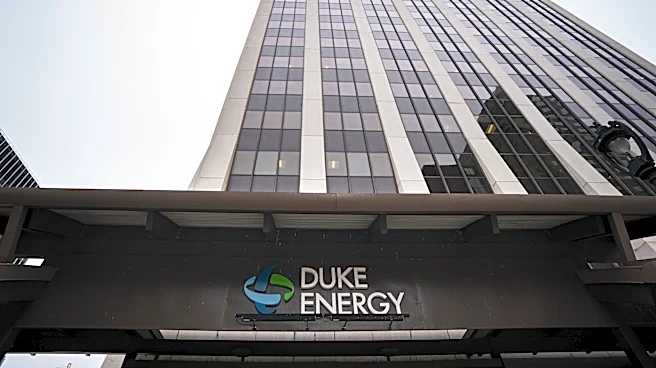
The North Carolina Utilities Commission has approved rate increases for Duke Energy customers, effective January 2027. Residential customers of Duke Energy Progress are projected to see an increase of approximately 9.3% over two years, while Duke Energy Carolinas
residential customers face a 9.5% increase. This translates to an additional $15.51 per month for typical Duke Energy Progress customers and $11.19 per month for Duke Energy Carolinas customers by 2028. The decision also introduces new requirements for large data centers, mandating special rate schedules and financial obligations for facilities with electricity demands of at least 50 megawatts. These new rules aim to protect other customers from bearing the full cost of infrastructure expansions driven by the significant energy demands of data centers, which support artificial intelligence and cloud computing. The commission's approval comes despite widespread customer opposition regarding affordability concerns.
Why It's Important?
These rate increases will significantly impact household budgets across North Carolina, particularly for those on fixed incomes or already struggling with living costs. The decision highlights the ongoing challenge of balancing utility infrastructure needs with consumer affordability. The new regulations for data centers are a crucial development, as they address the escalating energy demands from the tech sector and aim to ensure that these large consumers contribute proportionally to the grid's expansion and maintenance. This could set a precedent for how other states manage the energy consumption of rapidly growing industries. However, environmental advocates argue that the approved return on equity for Duke Energy prioritizes shareholder profits over customer relief and missed opportunities for clean energy incentives, potentially leading to increased pollution and higher long-term costs for ratepayers.
What's Next?
Duke Energy Carolinas must submit final revenue calculations and rate schedules to state regulators for review before the new rates take effect in January 2027, with a second round of increases scheduled for January 2028. The commission has also directed Duke to work out how much of certain infrastructure costs should be paid by data centers. Asheville City Council, which has a 12-month moratorium on new data centers, is studying their impact and expects to release draft recommendations in early January 2027, with proposed changes going before the Planning and Zoning Commission in February and City Council in the spring. This local action, alongside the state's new rules, indicates a growing focus on managing the energy and resource demands of data centers.
Beyond the Headlines
The approval of these rate hikes and the new data center regulations underscore a broader tension between economic development, energy infrastructure, and consumer protection. The rapid growth of data centers, fueled by advancements in AI and cloud computing, presents both economic opportunities and significant challenges for existing energy grids. The debate over who should bear the costs of expanding infrastructure to meet this demand—residential customers, businesses, or the data centers themselves—is likely to intensify. This situation also highlights the need for innovative energy policies that encourage clean energy solutions and ensure equitable cost distribution, especially as states strive to meet carbon reduction goals while accommodating industrial growth. The outcome in North Carolina could influence regulatory approaches in other regions facing similar pressures.