







What's Happening?
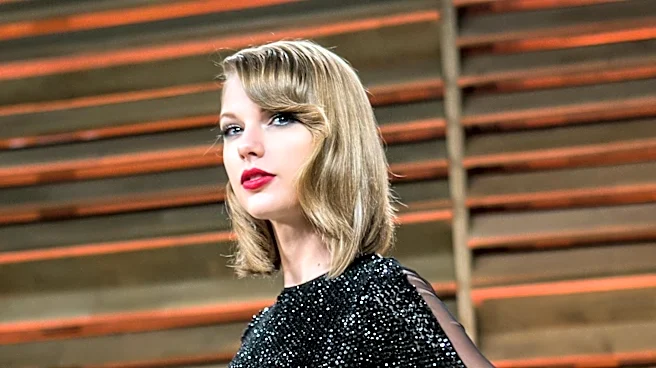
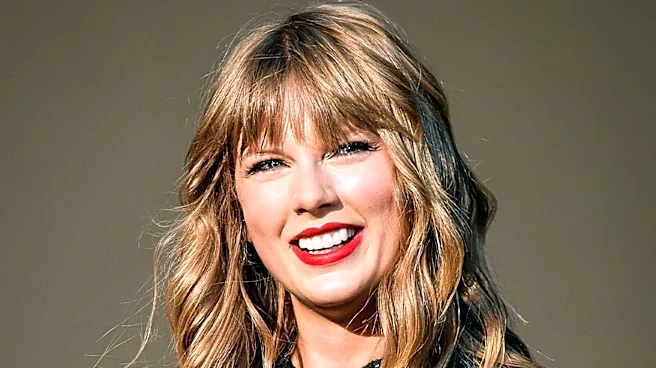
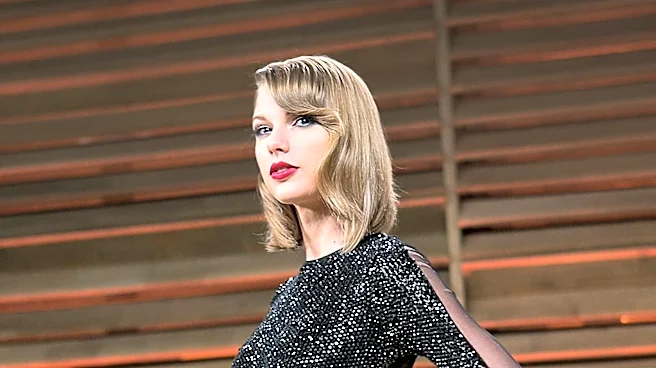
An industry insider has claimed that Taylor Swift maintains a tight grip on the music industry, suggesting that female artists must 'fall in line' with her to achieve success. This assertion comes in the wake of a critical Vanity Fair profile by May Jeong,
which scrutinized Swift's relationship with Travis Kelce and their recent wedding. The profile, which relied on over 100 sources, depicted Swift as a 'mean girl' who meticulously controls her career and image. While Jeong's article has faced criticism, the unnamed insider supports its claims, telling the Daily Mail that Swift's perceived iron-fisted control has deterred innovative artists. The source further stated that every record label desires their own 'Taylor,' but only women who align with Swift's perceived standards seem to thrive in the pop music scene, implying a need to 'kiss the ring' for success.
Why It's Important?
These allegations, if widely accepted, could significantly impact perceptions of fairness and opportunity within the music industry, particularly for emerging female artists. The claim that artists must conform to a certain mold or align with a dominant figure like Taylor Swift raises questions about artistic freedom and diversity. It suggests a potential chilling effect on innovation, as artists might feel pressured to emulate successful models rather than pursuing unique creative paths. For record labels, this narrative could influence talent scouting and development strategies, potentially leading to a more homogenized pop landscape. Furthermore, it could spark broader discussions about power dynamics and potential monopolistic influences within the entertainment sector, affecting how artists, executives, and the public view the industry's competitive environment.
What's Next?
The immediate aftermath could see increased scrutiny on the music industry's power structures and the influence of dominant artists. While Taylor Swift has not publicly addressed the Vanity Fair profile or the insider's comments, her silence or a future response could shape public discourse. Other artists, particularly those who have achieved success, might be prompted to comment on the alleged industry dynamics, either supporting or refuting the claims. This situation could also lead to more investigative journalism into the inner workings of major record labels and artist management, potentially uncovering broader patterns of influence or control. The ongoing debate may also influence how fans perceive Swift and other successful artists, potentially shifting public opinion regarding their roles as industry leaders.
Beyond the Headlines
Beyond the immediate controversy, these claims touch upon deeper ethical and cultural dimensions within the entertainment industry. The idea of a single artist wielding such significant control raises questions about meritocracy versus conformity. It could highlight a systemic issue where commercial success is prioritized over artistic originality, potentially stifling diverse voices and creative experimentation. Legally, while difficult to prove, such allegations could spark discussions about anti-competitive practices if a dominant artist's influence is perceived to unfairly limit opportunities for others. Culturally, it reflects ongoing debates about the role of celebrity power and the pressures faced by women in highly competitive industries, where success can sometimes be perceived as requiring adherence to established norms rather than breaking new ground.