




What's Happening?
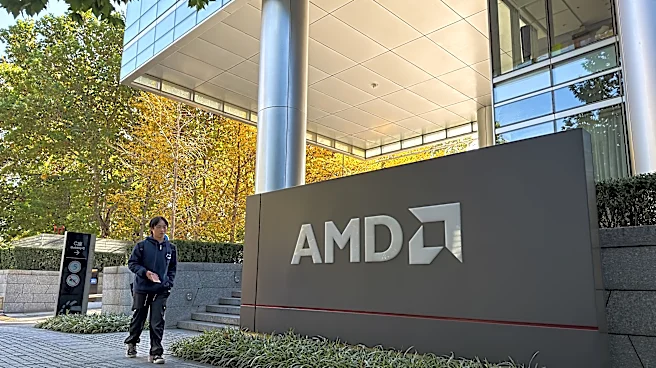
Advanced Micro Devices (AMD), a Santa Clara, California-based chip designer, announced in mid-November the completion of its acquisition of World Labs. This strategic move integrates the World Labs team into AMD, aiming to enhance the company's capabilities
across the artificial intelligence stack. As part of the acquisition, Fei-Fei Li, formerly of World Labs, has joined AMD as executive vice president and chief scientist, reporting directly to Lisa Su, AMD's chair and chief executive officer. World Labs is recognized for its work in spatial intelligence, developing 'world models' that can perceive, generate, reason about, and interact with virtual and physical environments. Their technologies include tools like Viewfinder for scene reconstruction, Chisel for scene building, and Marble for creation. AMD's CEO, Lisa Su, emphasized that this integration will allow for the co-optimization of compute platforms and AI models, providing hardware and software teams with earlier insights into future model requirements. The acquisition price and financial terms were not disclosed.
Why It's Important?
This acquisition is significant for AMD as it deepens its involvement in the rapidly evolving artificial intelligence sector. By bringing World Labs' model researchers in-house, AMD aims to create a more cohesive development process where hardware and software are designed with AI models in mind from the outset. This integrated approach is crucial for delivering the infrastructure needed for the next generation of AI, potentially giving AMD a competitive edge against other major players in the AI hardware market. The addition of Fei-Fei Li, a prominent figure in AI research, as chief scientist further signals AMD's commitment to leading in AI innovation. Her expertise in robotic learning and simulation, where machines are trained in virtual spaces before operating in the physical world, could unlock new applications and efficiencies for AMD's AI platforms. This move positions AMD to better serve the growing demand for AI-optimized computing solutions across various industries.
What's Next?
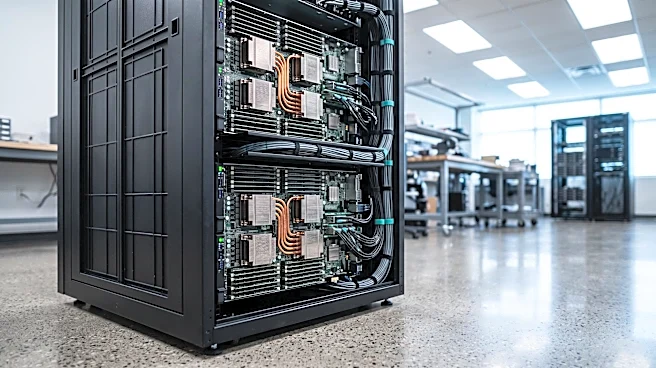
Following the acquisition, World Labs researchers will continue their foundational model research, now in collaboration with AMD engineers. This integration is expected to foster a synergistic environment where insights from model development directly influence the design of AMD's processors, graphics chips, and data center accelerators. AMD anticipates that this collaboration will help shape the hardware, software, and systems it develops for the open AI ecosystem, enabling researchers and developers to push the boundaries of artificial intelligence. The company will likely focus on leveraging World Labs' spatial intelligence and world model technologies to enhance its AI offerings, particularly in areas like robotic learning and simulation. Future announcements from AMD may detail specific product developments or research breakthroughs stemming from this integration, further solidifying its position in the AI market.
Beyond the Headlines
The acquisition of World Labs by AMD highlights a broader trend in the technology industry: the increasing convergence of hardware and software development in the AI domain. Companies are recognizing that optimal AI performance requires a holistic approach, where the underlying computational infrastructure is tightly integrated with the AI models themselves. This move by AMD could set a precedent for other hardware manufacturers to acquire or develop stronger in-house AI model research capabilities. Furthermore, World Labs' focus on 'world models' and spatial intelligence points to a future where AI systems are not just processing data but are also capable of understanding and interacting with complex virtual and physical environments. This has profound implications for fields like robotics, autonomous systems, and advanced simulation, potentially leading to more intelligent and adaptable AI applications across various sectors.