

What's Happening?
Oklo Inc. has finalized multiple definitive, multi-year contracts with Centrus Energy for high-assay low-enriched uranium (HALEU). This fuel supply is sufficient to power up to five of Oklo's Aurora powerhouses for several years, with deliveries from
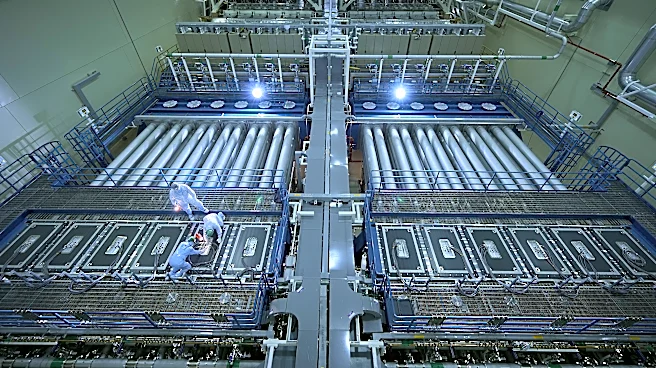
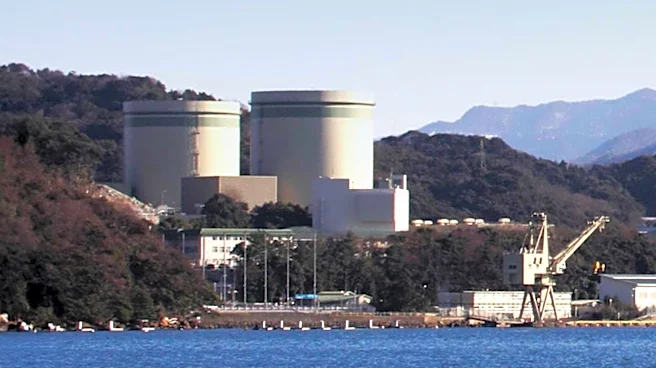
Centrus's Ohio plant slated to commence in 2029. This agreement formalizes a letter of intent from June 2026. The deal is supported by Meta's prepayment for future Oklo power production, specifically securing fuel for the initial phase of Oklo's planned 1.2 GW campus in Ohio. Oklo's Aurora reactors are advanced fast reactors designed to operate on recycled nuclear waste. These five units could collectively generate up to 375 MW, based on Oklo's 15-75 MWe range per unit. The HALEU for the Meta project will be produced at Centrus's American Centrifuge Plant in Ohio, with Meta's prepayment funding this production. Oklo CEO Jacob DeWitte discussed the significance of this fuel deal in advancing AI power buildout.
Why It's Important?
This fuel deal is crucial for the advancement of nuclear energy solutions for data centers and the broader energy sector in the U.S. By securing HALEU, Oklo is taking a significant step towards realizing its commitment to Meta, which is part of a larger 12 GW Master Power Agreement involving several companies including Switch, Equinix, and Diamondback Energy. The agreement highlights the growing demand for reliable, high-capacity power sources to support the expanding artificial intelligence infrastructure. Meta's indirect payment for the fuel upstream demonstrates a strategic investment by hyperscalers in long-term, stable energy solutions, acknowledging the extensive lead times required for nuclear infrastructure development. This move also supports the domestic nuclear fuel supply chain, as Centrus will produce the HALEU in Ohio, contributing to U.S. energy independence and job creation in the nuclear sector. The use of advanced fast reactors capable of running on recycled nuclear waste also signals a move towards more sustainable and efficient nuclear power generation.
What's Next?
Deliveries of HALEU from Centrus are scheduled to begin in 2029, which will enable Oklo to fuel its Aurora powerhouses. While Oklo has not yet delivered a commercial reactor, the first Aurora unit is targeted for deployment in late 2027 or early 2028. This timeline indicates that the fuel will be available as Oklo's reactors come online. The partnership between Oklo and Meta, along with the fuel supply from Centrus, sets a precedent for how large technology companies are investing in future energy needs. Further discussions with additional potential HALEU suppliers are ongoing, as indicated in Oklo's 10-Q filing, suggesting a proactive approach to securing diverse fuel sources. The success of this project could encourage other hyperscalers and industrial customers to pursue similar long-term nuclear power agreements, accelerating the deployment of advanced nuclear technologies across the U.S. The focus will now shift to the construction and commissioning of Oklo's Aurora reactors and the timely commencement of HALEU deliveries.
Beyond the Headlines
This development underscores a significant shift in how major technology companies are addressing their massive energy demands, particularly those driven by AI. The long-term commitment to nuclear power, evidenced by Meta's prepayment for fuel years in advance, highlights a recognition that traditional energy sources may not suffice for future growth. This could catalyze broader investment in advanced nuclear technologies, including small modular reactors (SMRs) and fast reactors, which offer enhanced safety, efficiency, and waste reduction capabilities. The ability of Aurora reactors to utilize recycled nuclear waste also addresses a critical environmental concern associated with nuclear power, potentially transforming nuclear waste into a valuable resource. This strategic pivot towards nuclear energy by tech giants could reshape the energy landscape, driving innovation in reactor design, fuel cycle management, and grid integration, ultimately contributing to a more resilient and sustainable energy future for the U.S.