



What's Happening?
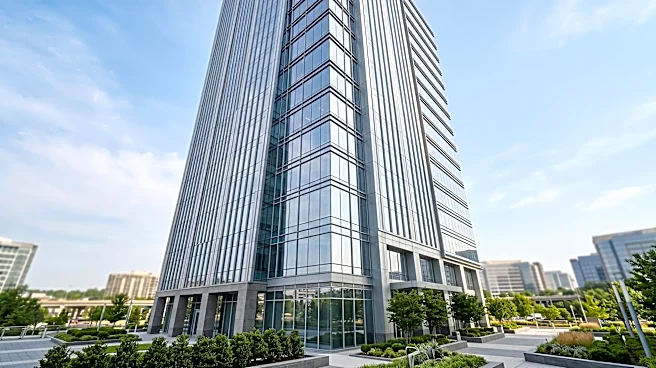
Middleburg Communities, a prominent real estate firm, is moving its headquarters to Tysons, Virginia. The company has signed a lease for 27,800 square feet at 1800 Tysons Blvd, a property owned by Lerner Enterprises. This relocation is part of a broader
trend of commercial leasing and development within the D.C. metropolitan area. In related regional news, Duball has secured a $58.6 million construction loan for a 150-unit office-to-residential conversion project at 1090 Vermont Ave. NW in Washington D.C. This $100 million development, acquired by Duball and an institutional partner for $23.1 million, is expected to begin physical improvements within 45 to 60 days, transforming a 160,000 square foot office building into apartments with ground-floor retail. Additionally, the 157-unit Aviator House, another office-to-residential conversion in D.C.'s Dupont Circle, has recently opened, benefiting from the city's Housing in Downtown 20-year tax abatement and including 16 affordable units. Fairfax County’s housing authority also acquired 2 acres near the Innovation Center metro for $23 million, with plans for up to 400 affordable units.
Why It's Important?
This relocation and the surrounding real estate activities signify continued investment and adaptive reuse within the D.C. metropolitan area, impacting both commercial and residential sectors. Middleburg Communities' move to Tysons, Virginia, underscores the area's appeal for corporate headquarters, potentially boosting local economies through job creation and increased business activity. The significant investment in office-to-residential conversions, such as Duball's project and the Aviator House, addresses the growing demand for housing in urban centers while repurposing underutilized office spaces. This trend is crucial for urban revitalization and sustainable development, as it helps alleviate housing shortages and reduces urban sprawl. The inclusion of affordable units in projects like the Aviator House and Fairfax County's acquisition near the Innovation Center metro highlights a commitment to addressing housing affordability, which is a critical social and economic issue in many U.S. cities. These developments indicate a strategic effort to balance commercial growth with community needs, potentially setting a precedent for future urban planning initiatives.
What's Next?
The D.C. metropolitan area is expected to see continued investment in adaptive reuse projects, particularly the conversion of office buildings into residential units, driven by policy support and market demand. The physical improvements for Duball's 1090 Vermont Ave. NW project are slated to begin within 45 to 60 days, indicating a swift progression towards its completion and the introduction of new residential units and ground-floor retail. The success of projects like the Aviator House, which benefits from tax abatements and includes affordable housing, may encourage more developers to pursue similar initiatives, potentially expanding the availability of affordable housing options. Fairfax County's plans for up to 400 affordable units near the Innovation Center metro suggest a sustained focus on increasing housing accessibility. These ongoing developments are likely to attract further commercial leasing activities and residential investments, shaping the urban landscape and economic dynamics of the region for the foreseeable future.
Beyond the Headlines
The ongoing transformation of office spaces into residential units in the D.C. metropolitan area reflects a broader societal shift in how urban environments are utilized, moving away from solely commercial hubs to more integrated live-work-play communities. This trend has profound implications for urban planning, infrastructure development, and community services. Ethically, the emphasis on including affordable housing units in new developments, supported by initiatives like D.C.'s Housing in Downtown tax abatement, addresses critical social equity concerns by ensuring that urban revitalization benefits a wider range of income levels. Legally, such projects often navigate complex zoning laws and regulatory frameworks, setting precedents for future mixed-use developments. Culturally, the creation of vibrant, mixed-use neighborhoods can foster stronger community ties and enhance the quality of urban life. This long-term shift could lead to more resilient and adaptable cities, better equipped to respond to changing economic conditions and population needs, ultimately redefining the urban experience in the U.S.