







What's Happening?
WK Kellogg Co has announced it will remove all artificial colors and the preservative BHT from its entire cereal portfolio by the end of 2026, a year ahead of its original schedule. This initiative follows significant investment in manufacturing facilities
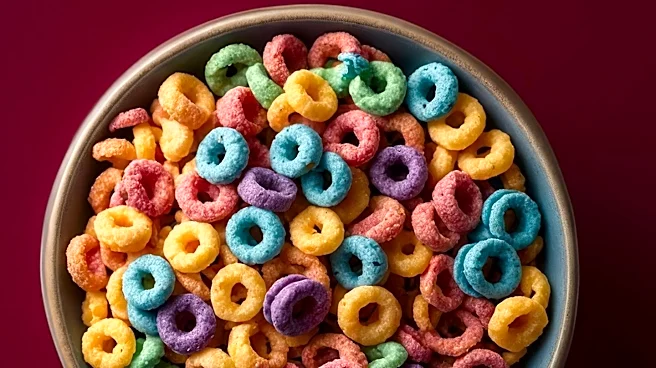
to facilitate the transition to naturally derived colors. Products like Kellogg’s Froot Loops and Kellogg’s Apple Jacks will begin production with reformulated recipes later this year, with distribution to retailers expected before the end of 2026. The company plans to replace artificial colors with natural sources such as fruit and vegetable juices and other plant-based ingredients. This move is part of a broader effort to evolve its cereal offerings in response to changing consumer preferences, which also includes increasing whole grains and fiber, and reducing sugar and sodium.
Why It's Important?
This accelerated transition by WK Kellogg Co reflects a significant shift in the food industry driven by consumer demand for simpler, more recognizable ingredients. The company's commitment to removing artificial colors and BHT from its extensive cereal portfolio, which includes popular brands like Frosted Flakes, Rice Krispies, and Special K, could set a new standard for other major food manufacturers. This move is particularly impactful for the U.S. market, where health-conscious consumers are increasingly scrutinizing product labels. By proactively addressing these concerns, WK Kellogg Co aims to maintain consumer trust and market share. The investment in manufacturing facilities to support this change also highlights the operational complexities and costs associated with such large-scale reformulations, potentially influencing smaller companies to follow suit or innovate in similar ways.
What's Next?
WK Kellogg Co will begin manufacturing reformulated products, including Froot Loops and Apple Jacks, later this year, with these items expected to reach retailers before the end of 2026. The company plans to continue its efforts to enhance the nutritional profile of its cereals by increasing whole grains and fiber, and reducing sugar and sodium. This initiative is also supported by the company's SPOONS on-pack nutrition guide, which emphasizes simple ingredients. The accelerated timeline suggests a strong commitment to these changes, and consumers can anticipate seeing these new products on shelves sooner than initially planned. The company will also continue to work on eliminating BHT from its cereal packaging, further aligning with its sustainability and health-focused goals.
Beyond the Headlines
The decision by WK Kellogg Co to remove artificial colors and BHT from its cereals underscores a broader cultural and ethical shift in consumer expectations regarding food production. This move reflects a growing demand for transparency and natural ingredients, pushing food manufacturers to re-evaluate their product formulations. Beyond the immediate health implications, this trend highlights a societal move towards more mindful consumption and a greater awareness of the impact of food additives. The company's investment in manufacturing to accommodate these changes also points to the long-term economic and operational challenges and opportunities within the food industry, as companies strive to balance consumer preferences with production efficiency and cost. This could lead to further innovation in natural food colorants and preservatives across the industry.