




What's Happening?
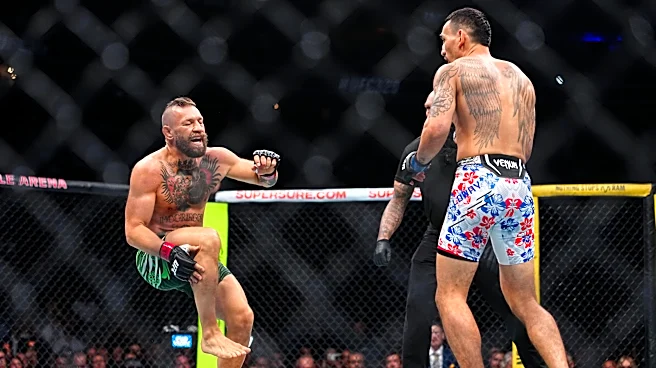
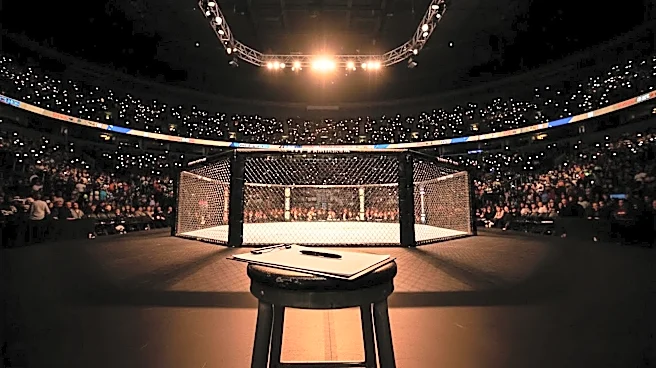
Conor McGregor's highly anticipated return to the UFC octagon at UFC 329 ended abruptly when he injured his knee in the opening seconds of his fight against Max Holloway. The fight, held at T-Mobile Arena in Las Vegas, saw McGregor slip and fall multiple
times before the referee stopped the bout. Holloway, initially confused by McGregor's inability to continue, gestured to the referee to end the fight. Video replays showed McGregor injuring himself with his first strike, a leaping left roundhouse kick, which led to the fight's premature conclusion.
Why It's Important?
McGregor's injury is a significant setback for both the fighter and the UFC. As one of the sport's biggest stars, McGregor's presence in the octagon draws substantial attention and revenue. His injury not only affects his career trajectory but also impacts the UFC's promotional efforts and financial outlook. The incident underscores the unpredictability and physical demands of mixed martial arts, potentially influencing future training and safety measures. For fans, McGregor's injury is a disappointment, as it cuts short the excitement surrounding his return after a five-year hiatus.
What's Next?
Following the injury, McGregor will need to undergo medical assessments to determine the severity of his knee damage and the required recovery time. The UFC and McGregor's management will likely evaluate his future in the sport, considering both his health and competitive aspirations. Fans and the MMA community will be eager for updates on McGregor's condition and any plans for a potential comeback. Meanwhile, the UFC may need to adjust its promotional strategies to maintain audience interest in the absence of one of its most popular fighters.