


What's Happening?
Cinematographer Isiah Donté Lee discussed his role in creating the dark, gloomy, and ominous atmosphere for Netflix's series 'The Body.' The show, inspired by works like 'Mean Girls,' 'Carrie,' and 'Jennifer's Body,' follows Catholic school girls who
experience prophetic visions after a dance-team initiation, leading to mass hysteria. Lee emphasized that the series prioritizes atmosphere over action sequences, aiming to create a subtle horror that makes viewers uncomfortable. He highlighted the collaborative process with writer, showrunner, and director Quinn Shephard, noting her strong vision and emotional presence during production. Lee worked on episodes 1, 2, 6, and 8, and described the challenges of shooting pivotal scenes, such as the 'Devil's House' sequence, early in production.
Why It's Important?
Lee's insights into the cinematography of 'The Body' shed light on the intricate process of visual storytelling in modern television. His approach to creating an 'uncomfortable' visual experience, rather than relying on overt horror tropes, demonstrates a nuanced understanding of psychological tension. This method is crucial for shows that aim to explore complex themes like mass hysteria and prophetic visions, as it allows the audience to engage with the narrative on a deeper, more visceral level. The collaboration between a cinematographer and director, as described by Lee, is fundamental to achieving a cohesive artistic vision, impacting the overall quality and reception of a series. This creative synergy is vital for Netflix, a major streaming platform, as it seeks to produce compelling and visually distinctive content to attract and retain subscribers in a competitive market.
Beyond the Headlines
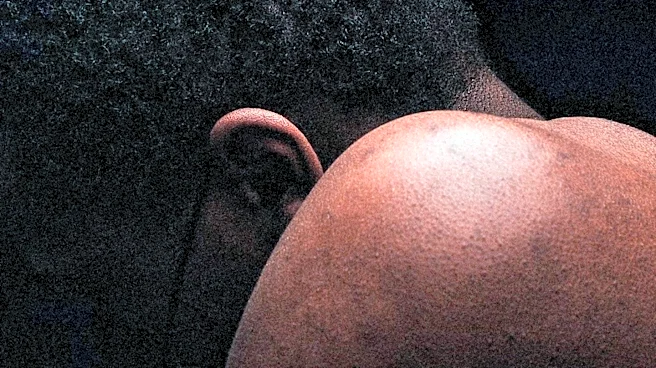
The discussion of 'The Body' and its visual style touches upon broader trends in horror and psychological thrillers, where atmosphere and subtle discomfort are increasingly favored over jump scares and explicit gore. Lee's emphasis on playing with shadow and light, and his desire to create images that make viewers 'a little uncomfortable,' reflects a sophisticated approach to genre filmmaking. This artistic choice can elevate a series beyond mere entertainment, prompting viewers to confront deeper anxieties and societal issues. The show's setting in 2004, which Lee notes is now considered a 'period piece,' also highlights how quickly cultural contexts shift, influencing how stories are told and perceived. This temporal distance allows for a re-examination of past social dynamics through a contemporary lens, adding another layer of depth to the narrative.