



What's Happening?
Tutor Intelligence, a robotics research and deployment company based in Watertown, Massachusetts, has successfully raised $75 million in Series B funding. The round was led by Andreessen Horowitz, with additional participation from Union Square Ventures
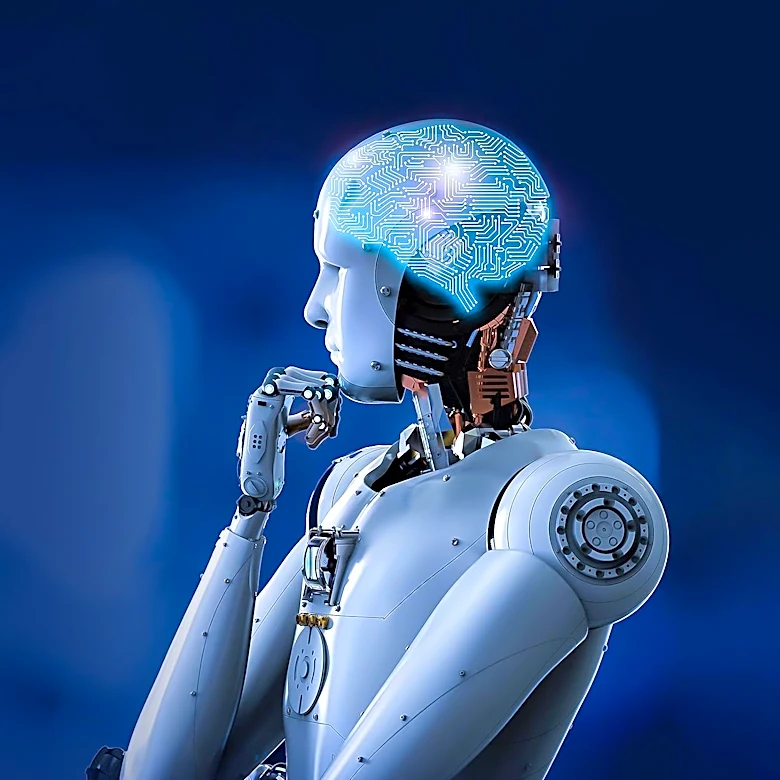
and Neo, bringing the company's total capital raised to $117 million. This significant investment will be utilized to advance Tutor's frontier robot foundation model training, as well as to scale the manufacturing and deployment of its robot workers, Sonny and Cassie, across the United States. Tutor Intelligence aims to bridge the gap between robotic and human capabilities by deploying internet-connected robots into production environments, where they perform real work for customers with remote human oversight. The data generated from these tasks is then used to train more advanced foundation models, enhancing the robots' capabilities and enabling wider deployment. The company's business model involves selling robot work by the hour or by the pick, without requiring upfront purchases or long-term contracts from customers, and includes deployment, maintenance, and regular software upgrades.
Why It's Important?
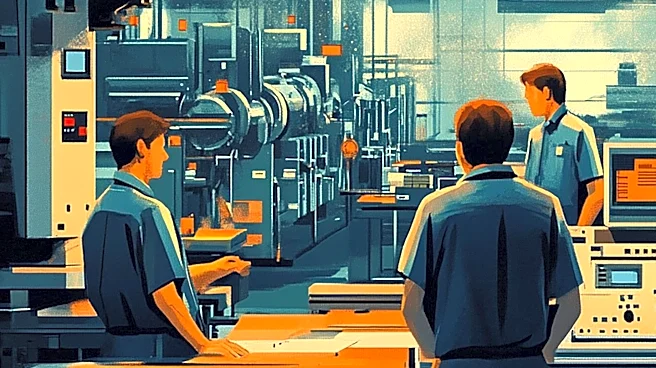
This funding round is crucial for Tutor Intelligence as it signifies a growing trend in enterprise adoption of AI and robotics, moving beyond pilot programs to measurable operational integration. By offering robots that can perform tasks like lifting, moving, and manipulation in manufacturing and logistics, Tutor Intelligence addresses critical labor needs and aims to make basic goods more affordable for American consumers. The company's full-stack approach, encompassing robots, models, and deployments, creates a network where each new deployment enhances the intelligence of the entire fleet, leading to smarter, more cost-effective, and easier-to-deploy robots. This model could significantly impact various U.S. industries by increasing automation, improving efficiency, and potentially reshaping the labor market. The company's commitment to building and deploying over 1,000 robots by the end of 2027, all within the United States, also highlights a focus on domestic manufacturing and job creation within the robotics sector.
What's Next?
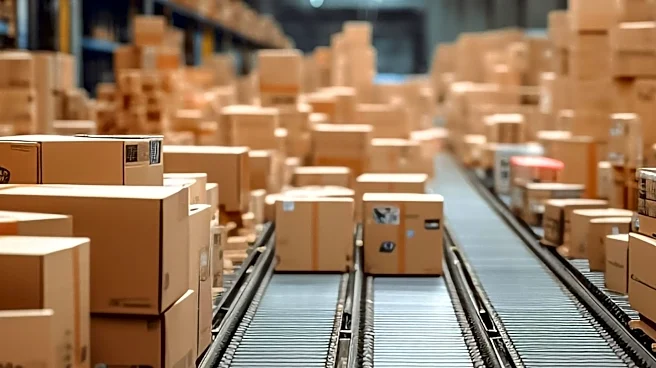
With the new funding, Tutor Intelligence plans to accelerate its robot foundation model training and expand the manufacturing and deployment of its Sonny and Cassie robot workers. The company is on track to have more than 1,000 robots under contract by the end of 2027, all built and deployed from the United States. This expansion will see Tutor robots continue to work in manufacturing and logistics networks, handling goods ranging from breakfast cereals and snacks to cosmetics and toys. The continuous learning loop, where real-world data trains better models, suggests an ongoing evolution of robot capabilities. As more businesses adopt Tutor's services, the demand for these robot workers is expected to increase, potentially leading to further investment and broader integration of intelligent robotics into the American economy. The company's model of selling robot work as a service, rather than a product, is likely to attract more businesses seeking flexible and scalable automation solutions.
Beyond the Headlines
The rise of companies like Tutor Intelligence points to a significant shift in the nature of work and the economy, driven by advanced robotics and AI. While the immediate benefits include increased efficiency and potentially lower costs for goods, there are broader implications for the workforce. The deployment of robots like Sonny and Cassie in roles traditionally performed by humans raises questions about job displacement and the need for workforce retraining and adaptation. However, the model also suggests new types of jobs, such as remote operators or 'tutors' who oversee robot operations. The ethical considerations of AI-driven automation, particularly regarding the balance between human and machine labor, will become increasingly prominent. Furthermore, the development of a 'network of intelligence' where robots continuously learn from real-world data could lead to unprecedented levels of automation and a redefinition of productivity across various sectors, potentially impacting societal structures and economic policies in the long term.