




What's Happening?
Cleveland-Cliffs Inc., a major U.S. steel producer, is investing $200 million to expand its grain-oriented electrical steel (GOES) production at its Butler Works plant in Pennsylvania. This expansion is driven by increasing demand for transformers and the
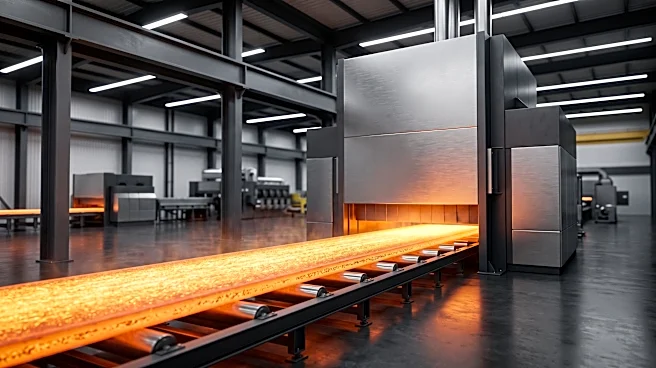
modernization of the U.S. power grid. The project, which has received a $75 million grant from the U.S. Department of Energy (DOE), aims to increase GOES steel production by up to 25%. Butler Works is currently the sole U.S. manufacturer of GOES steel, a critical material for transformer cores and power grid equipment. The modernization will involve installing four new induction reheating furnaces, replacing two gas-fired furnaces, which will partially electrify the process, improve steel quality, reduce losses, and cut emissions during hot rolling. Construction is expected to be completed by early 2028, employing approximately 220 construction workers at its peak. This investment comes as Cleveland-Cliffs also faces challenges, including the suspension of some production capacity at its Stelco plant in Ontario, Canada, due to U.S. trade tariffs and market conditions, affecting 500 employees.
Why It's Important?
This significant investment by Cleveland-Cliffs underscores the growing strategic importance of domestic manufacturing capabilities for critical infrastructure components in the U.S. The expansion of GOES steel production at Butler Works directly addresses the surging demand for transformers, which is essential for modernizing the U.S. power grid, integrating new generation capacities, and supporting the rapid construction of data centers. By enhancing its capacity and electrifying parts of its production process, Cleveland-Cliffs is not only bolstering its market position as the sole domestic supplier of GOES steel but also contributing to energy efficiency and reduced emissions in the steel industry. This move aligns with broader national efforts to strengthen supply chains and reduce reliance on foreign imports for vital materials. The project's support from the U.S. Department of Energy highlights a governmental commitment to fostering domestic production and technological advancement in key industrial sectors, potentially creating jobs and stimulating economic activity in Pennsylvania.
What's Next?
The expansion project at Cleveland-Cliffs' Butler Works plant is scheduled for completion by early 2028, with the DOE's official timeline extending to 2029. Upon completion, the plant is expected to increase its GOES steel production by up to 25%, directly impacting the supply chain for transformers and power grid equipment in the U.S. The company will continue to work with the U.S. Department of Energy, which provided a $75 million grant, to ensure the successful implementation of the project. The shift to induction reheating furnaces will lead to improved steel quality and reduced emissions, aligning with environmental goals. Meanwhile, Cleveland-Cliffs will need to manage the implications of suspending production at its Stelco plant in Canada, which affects 500 employees and is attributed to U.S. trade tariffs and market conditions. This dual focus on domestic expansion and international operational adjustments will be critical for the company's strategic direction in the coming years.
Beyond the Headlines
The investment by Cleveland-Cliffs in GOES steel production at its Butler Works plant has deeper implications beyond immediate capacity increases. It highlights a strategic pivot towards high-value, specialized steel products crucial for national infrastructure and energy security. As the U.S. grapples with an aging power grid and the imperative to transition to cleaner energy sources, the domestic availability of GOES steel becomes a critical enabler. This move could reduce vulnerabilities in the supply chain for essential electrical components, which have historically been subject to global market fluctuations and geopolitical tensions. Furthermore, the partial electrification of the steelmaking process at Butler Works signifies a broader trend towards decarbonization within heavy industries, potentially setting a precedent for other U.S. manufacturers. The government's financial support through the DOE grant underscores a policy commitment to industrial resilience and technological innovation, suggesting a long-term vision for a robust, domestically sourced industrial base capable of supporting national strategic objectives.