



What's Happening?
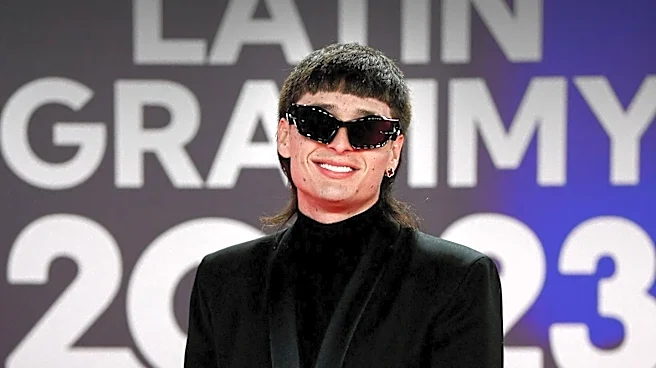
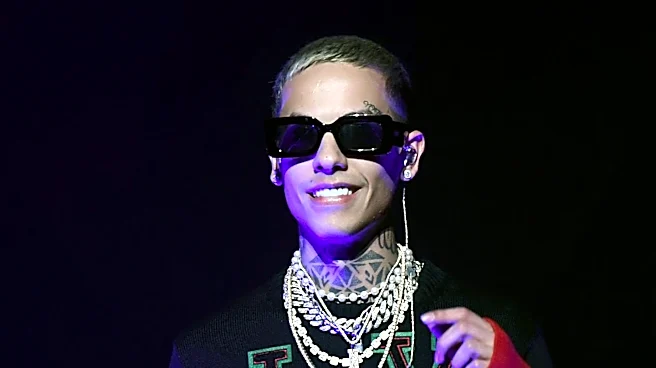
Natanael Cano, a Mexican singer known for 'corridos tumbados,' has made a public reappearance in Baja California, Mexico, after several weeks away from the public eye. He was seen at Villa Ortega's, a seafood restaurant in Puerto Nuevo, where he interacted
with fans and posed for photographs. This sighting follows his announcement on October 8 to suspend the remaining ten dates of his 'Natanael Cano Vol. 1' tour, which included performances in various Mexican cities such as Veracruz, Puebla, Oaxaca, Monterrey, and Acapulco. His team released a statement indicating that the suspension was to allow Cano to focus on his health and well-being. The following day, his parents issued a message stating their decision to support him in improving his physical and mental health, emphasizing that 'before being a musician and artist, Natanael is our son.' His reappearance, with shaved hair and accompanied by his mother, has fueled speculation, particularly from content creator Chamonic, that he recently completed a rehabilitation program, though this has not been confirmed by Cano, his family, or his representatives.
Why It's Important?
This event highlights the increasing public and media scrutiny surrounding the personal lives and well-being of prominent musical artists, particularly those with a significant following. The decision by Natanael Cano to prioritize his health over professional commitments, and the subsequent public support from his family, could set a precedent for other artists facing similar pressures. It underscores a growing awareness within the entertainment industry regarding mental and physical health challenges faced by performers. For fans, the unconfirmed nature of his health status and the speculation around rehabilitation centers can create a cycle of rumor and anticipation, impacting public perception and engagement with his music. The situation also reflects the broader cultural shift towards more open discussions about mental health, even within celebrity circles, potentially encouraging others to seek help. The financial implications for tour organizers and venues due to canceled concerts are also significant, demonstrating the ripple effect of an artist's personal decisions on the wider entertainment ecosystem.
What's Next?
The immediate next steps involve awaiting official statements from Natanael Cano, his family, or his management regarding his health status and future professional plans. While speculation about his alleged rehabilitation continues, no confirmation has been provided. His team has not yet announced new dates for the suspended concerts or indicated when he might return to performing. Fans and the media will likely monitor his social media and public appearances for any clues about his recovery and career trajectory. The unconfirmed reports of his time in a rehabilitation center suggest that if true, his return to the stage would likely be accompanied by a narrative of recovery and renewed focus. The entertainment industry will be watching to see how Cano manages his public image and career following this hiatus, especially concerning how he addresses the health-related reasons for his absence. His eventual return will be a significant event for his fanbase and the 'corridos tumbados' genre.
Beyond the Headlines
The situation surrounding Natanael Cano extends beyond mere concert cancellations, touching upon the broader societal conversation about mental health in high-pressure professions. The public nature of his health-related hiatus, even without explicit details, contributes to destigmatizing discussions around seeking help for personal well-being. The emphasis from his family that 'before being a musician and artist, Natanael is our son' underscores the human element behind celebrity, reminding the public that performers are individuals with personal struggles. This narrative can foster greater empathy and understanding from fans, potentially shifting the dynamic between artists and their audience towards one that values well-being alongside performance. Furthermore, the incident highlights the intense demands placed on young artists in the music industry, prompting questions about the support systems available to them. It could encourage a re-evaluation of industry practices to better safeguard the mental and physical health of performers, ensuring that career longevity is not sacrificed for immediate success.