
What's Happening?
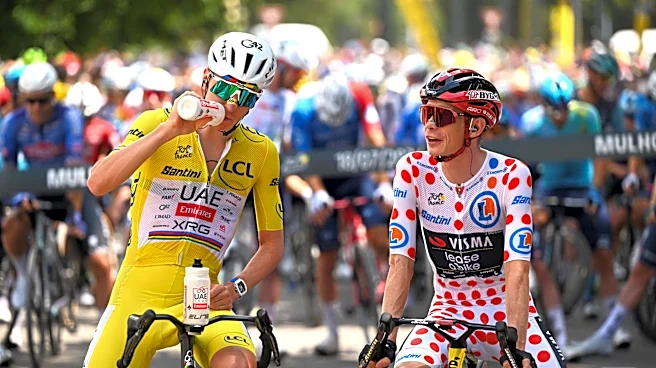
Doping remains a contentious issue at the Tour de France, despite significant efforts to clean up the sport. Recent controversies, including late-night doping tests for top cyclists Tadej Pogačar and Jonas
Vingegaard, have reignited debates about the effectiveness of current anti-doping measures. While the sport has made strides in reducing doping through measures like the biological passport and the Whereabouts system, gaps and challenges persist. The use of performance-enhancing drugs in the past, notably during the Lance Armstrong era, continues to cast a shadow over professional cycling.
Why It's Important?
The integrity of professional cycling is crucial for maintaining public trust and the sport's reputation. Persistent doping concerns can undermine the achievements of athletes and the credibility of competitions like the Tour de France. The ongoing challenges highlight the need for continuous improvement in anti-doping measures and the importance of transparency in the sport. Addressing these issues is essential for ensuring fair competition and protecting the health and safety of athletes.
What's Next?
The cycling community may need to explore new strategies to address doping, including advancements in testing technology and increased funding for anti-doping programs. Collaboration between cycling organizations, anti-doping agencies, and athletes will be key to developing effective solutions. The sport must also remain vigilant against emerging threats, such as the potential use of AI-designed performance-enhancing drugs. The future of professional cycling depends on its ability to adapt and respond to these challenges while maintaining the integrity of the sport.