






What's Happening?
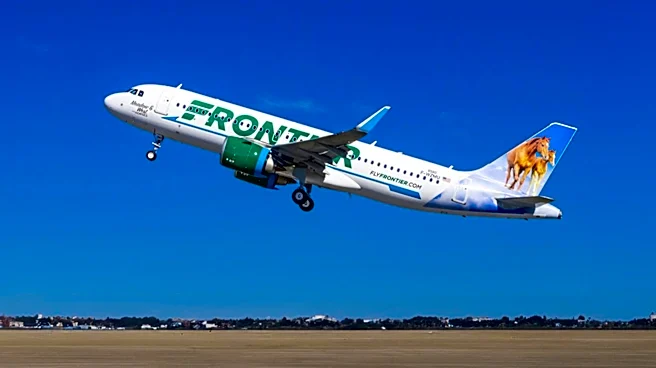
Frontier Group Holdings, Inc., parent company of Frontier Airlines, announced record financial results for the third quarter of 2026, with total revenue reaching approximately $1.4 billion. This represents a 53% increase compared to the same quarter in 2025.
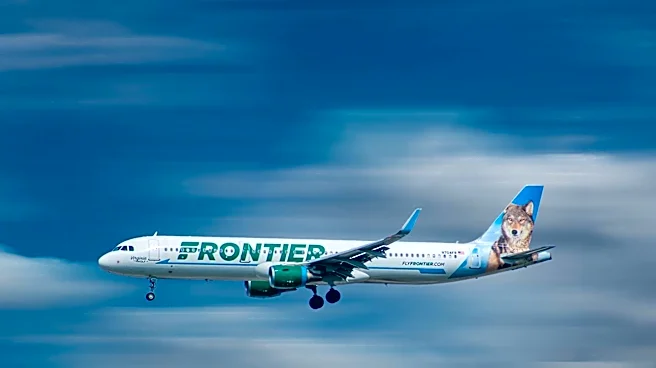
The airline also reported adjusted (non-GAAP) net income of $40 million, or $0.18 per diluted share, significantly surpassing its own guidance. This performance was driven by strong travel demand and the successful execution of the company's commercial strategy, despite facing higher-than-expected fuel prices, which averaged $3.96 per gallon. Frontier maintained cost discipline, with total adjusted operating expenses at approximately $1.3 billion. The company ended the quarter with $1.18 billion in total liquidity and continued its fleet modernization efforts, including the early return of 13 A320neo leases and the acquisition of 10 A321neo aircraft.
Why It's Important?
Frontier Airlines' strong financial performance in the third quarter of 2026 is significant for the U.S. airline industry, demonstrating resilience and effective strategy execution amidst challenging economic conditions, particularly high fuel costs. The record revenue indicates robust consumer demand for air travel, which is a positive sign for the broader tourism and leisure sectors. By exceeding earnings guidance, Frontier showcases its ability to manage operational costs and optimize revenue streams, providing a potential benchmark for other low-cost carriers. The company's strategic fleet adjustments, focusing on more fuel-efficient A321neo aircraft, highlight a proactive approach to long-term sustainability and cost management, which could influence future investment and operational decisions across the industry. This success also suggests that the airline's 'America's Greenest Airline' positioning, with 107 ASMs per gallon, resonates with market trends towards efficiency.
What's Next?
Frontier Airlines has issued guidance for the fourth quarter of 2026, expecting adjusted (non-GAAP) diluted earnings per share between $(0.15) and $0.05. The airline anticipates continued progress in its commercial initiatives and strong travel demand, with revenue per available seat mile (RASM) projected to increase over 20% compared to the corresponding 2025 quarter. Capacity growth is estimated at 5% to 6% year-over-year, though elevated fuel prices are expected to remain a cost headwind. The company plans to take delivery of two A321neo aircraft in the fourth quarter, with five more scheduled for the first quarter of 2027, further enhancing its fleet efficiency. Frontier will continue to monitor market conditions, especially fuel prices, and adjust its strategies to maintain profitability and liquidity.
Beyond the Headlines
Frontier's success in navigating high fuel costs and delivering strong financial results points to a broader trend in the U.S. airline industry: the increasing importance of operational efficiency and strategic fleet management. The airline's focus on fuel-efficient aircraft not only reduces operational expenses but also aligns with growing environmental consciousness among consumers and investors. This could accelerate the adoption of newer, more sustainable aircraft models across the industry. Furthermore, the strong demand for air travel, despite economic uncertainties, suggests a fundamental shift in consumer spending priorities, favoring experiences over goods. This trend could have lasting implications for various sectors, influencing investment in travel infrastructure and related services. The ability of airlines like Frontier to adapt and thrive in a volatile environment underscores the dynamic nature of the travel industry and its critical role in the U.S. economy.