








What's Happening?
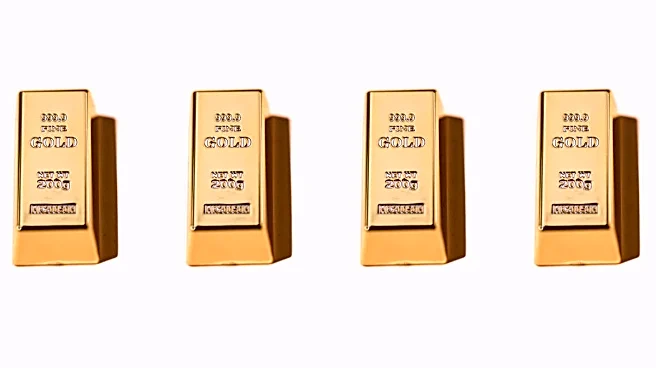
Barclays has forecasted that gold prices will reach $4,791 in 2026 and $4,900 in 2027, as the effects of the Iran conflict diminish and structural drivers reemerge. The recent decline in gold prices was attributed to a stronger U.S. dollar, rising equity
markets, and central bank gold sales. However, Barclays believes that persistent inflation, policy uncertainty, and central bank demand will support gold prices in the long term. The bank estimates that every percentage-point increase in inflation could boost gold prices by 5%. As the geopolitical tensions related to the Hormuz crisis ease, Barclays anticipates a reassertion of the dollar's downward trend and consistent central bank buying.
Why It's Important?
The forecast by Barclays highlights the potential for gold prices to recover as temporary factors subside and long-term structural drivers take precedence. Persistent inflation and central bank demand are key factors that could support gold prices, providing a hedge against economic uncertainty and currency fluctuations. For investors, the anticipated recovery in gold prices presents opportunities for strategic positioning in the precious metals market. The outlook also underscores the importance of monitoring geopolitical developments and inflation trends, which can significantly impact gold's appeal as a safe-haven asset.
What's Next?
As the Iran conflict winds down, investors will focus on inflation data and central bank actions to gauge the future trajectory of gold prices. Barclays' forecast suggests that structural drivers will play a more significant role in shaping gold's long-term outlook. Investors may consider exposure to gold mining stocks, which could benefit from rising gold prices. Additionally, ongoing geopolitical developments and economic indicators will be closely watched for their potential impact on inflation and monetary policy, influencing gold market dynamics.