





What's Happening?
CVR Energy, Inc. has announced a definitive agreement to acquire Marathon Petroleum Corporation's St. Paul Park, Minnesota, and Mandan, North Dakota refineries, along with Marathon's related marketing business. The total purchase price for this acquisition
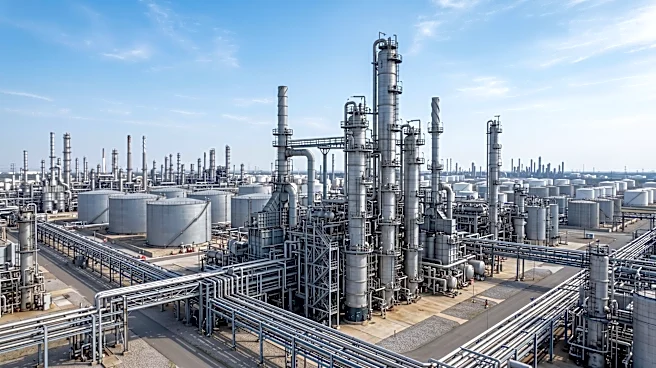
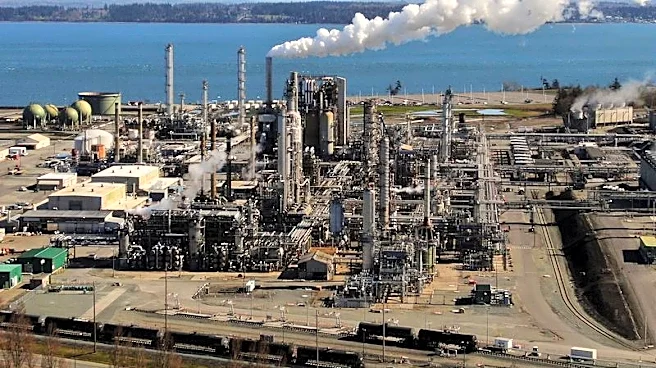
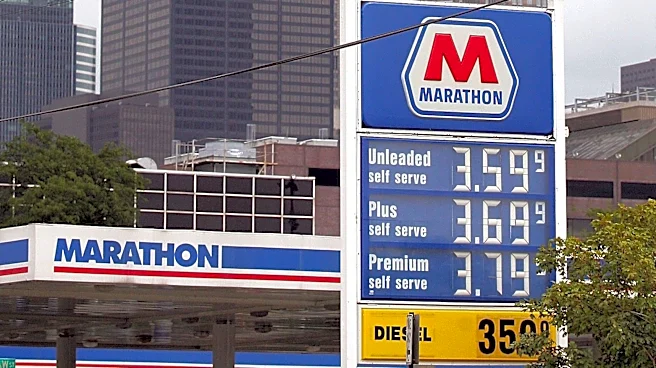
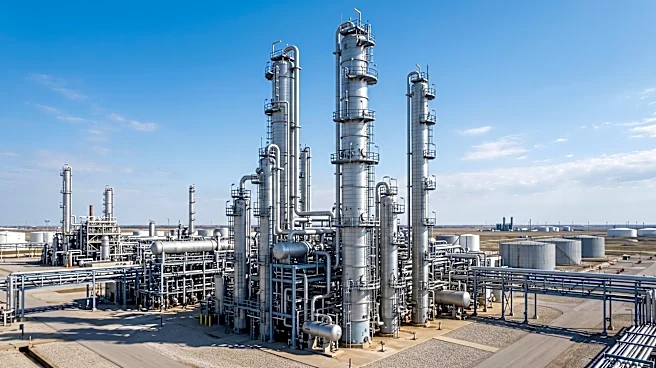
is approximately $4.2 billion, plus net working capital. This transaction will significantly expand CVR Energy's crude oil throughput capacity from approximately 207,000 to 384,000 barrels per day. The acquired assets include a 105,000 barrel-per-day refinery in St. Paul Park, a 72,000 barrel-per-day refinery in Mandan, and an integrated marketing channel supplying up to 590 branded locations across the Upper Midwest and Northern Great Plains regions. CVR Energy expects to fund the acquisition through a combination of $2.5 billion in committed secured debt financing, a $500 million equity commitment from its controlling shareholder, an $800 million equity investment from Trafigura US Holdings, Inc., and cash on hand. The transaction has been unanimously approved by CVR Energy’s Board of Directors and is anticipated to close by the end of 2026, subject to customary closing conditions and regulatory clearance.
Why It's Important?
This acquisition is poised to transform CVR Energy's scale and scope within the U.S. refining and marketing sector. By nearly doubling its refining capacity and establishing a significant footprint in the Upper Midwest and Northern Great Plains, CVR Energy aims to diversify its asset portfolio and broaden its exposure to regional transportation fuel demand. The company anticipates substantial financial benefits, including an expected increase in EBITDA and earnings per share. For the nine months ended September 30, 2026, the acquisition would have increased CVR Energy’s EBITDA from approximately $900 million to $2.0 billion on a pro forma basis, and earnings per share would have risen from $3.73 to $7.67. The integration of Marathon's marketing business is expected to create margin optimization opportunities and reduce exposure to volatile renewable identification number (RIN) costs. This strategic move is designed to create more durable and diversified earnings, support consistent free cash flow generation, and strengthen CVR Energy's competitive positioning in the market.
What's Next?
The transaction is expected to close by the end of 2026, pending regulatory clearance, including the expiration or termination of the waiting period under the Hart-Scott-Rodino Antitrust Improvements Act. Following the close, CVR Energy will integrate the newly acquired refineries and marketing operations into its existing portfolio. The company anticipates realizing approximately $70 million in annual run-rate synergies, primarily from selling, general, and administrative (SG&A) expenses, as well as commercial and operational opportunities. CVR Energy will also proceed with its financing plans, which include securing $2.5 billion in debt financing and equity investments. The company's existing senior notes will become secured on an equal and ratable basis with the new secured debt, and certain existing senior notes will be redeemed. The successful integration and realization of projected synergies will be key indicators of the transaction's long-term impact on CVR Energy's financial performance and market position.
Beyond the Headlines
This acquisition reflects a broader trend within the U.S. energy sector where companies are seeking to consolidate and optimize their asset portfolios to enhance efficiency and market reach. For Marathon Petroleum, the divestiture of these refineries aligns with its strategic objectives, potentially allowing it to focus on other core assets or reduce its overall refining footprint. For CVR Energy, this move signifies a significant expansion strategy, aiming to build a more resilient and diversified business capable of navigating market fluctuations. The increased scale could also provide CVR Energy with greater leverage in procurement and distribution, potentially leading to improved profitability. Furthermore, the deal highlights the ongoing importance of traditional fossil fuel infrastructure in meeting regional energy demands, even as the broader energy landscape shifts towards renewable sources. The integration of the marketing business also underscores the value of a vertically integrated model in optimizing margins from refining to retail distribution.