








What's Happening?
Tata Motors, a key entity within the USD 128 billion Tata group, stands as a prominent global automobile manufacturer. The company, founded in 1868 by Jamsetji Tata, is recognized for its innovative mobility solutions designed to meet customer aspirations.
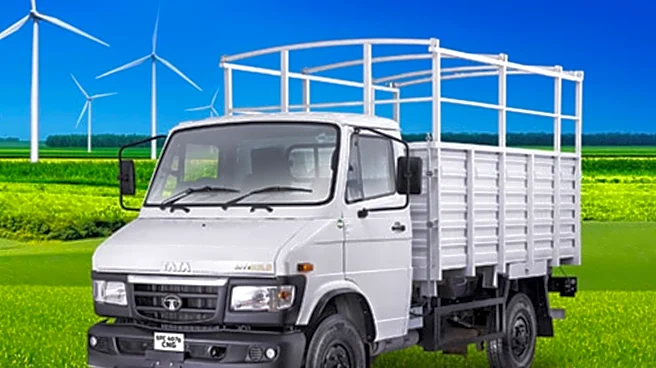
In India, Tata Motors holds the position of the largest automobile manufacturer, actively influencing the commercial vehicle sector. This influence is demonstrated through the introduction of advanced powertrains and electric solutions. These offerings are engineered for optimal performance and user comfort, while also focusing on minimizing life-cycle costs. Additionally, Tata Motors' passenger cars and utility vehicles incorporate 'Impact Design,' aiming to deliver a superior combination of performance, drivability, and connectivity.
Why It's Important?
Tata Motors' continued leadership in the Indian commercial vehicle market is significant for several reasons. Its focus on leading-edge powertrains and electric solutions indicates a commitment to sustainable and technologically advanced transportation, which can drive broader industry trends in India and potentially influence global markets. By prioritizing user comfort and low life-cycle costs, Tata Motors addresses key concerns for commercial operators, potentially leading to increased adoption of their vehicles and contributing to economic efficiency within the logistics and transportation sectors. The emphasis on 'Impact Design' for passenger vehicles suggests a strategic approach to market differentiation, aiming to capture consumer interest through a blend of performance, drivability, and connectivity. This strategy could set new benchmarks for automotive design and functionality in the region, impacting consumer expectations and competitive dynamics.
What's Next?
Tata Motors is expected to continue its trajectory of innovation in the automotive sector, particularly within the commercial vehicle segment in India. The company's ongoing development of advanced powertrains and electric solutions suggests a future focus on expanding its electric vehicle portfolio and enhancing the efficiency and sustainability of its commercial offerings. This could involve further investments in research and development for battery technology, charging infrastructure, and autonomous driving features for commercial applications. For passenger vehicles, the 'Impact Design' philosophy will likely evolve, leading to new models that further integrate performance, drivability, and connectivity. The company may also explore new market segments or expand its global footprint, leveraging its established manufacturing capabilities and brand recognition.
Beyond the Headlines
Beyond the immediate market implications, Tata Motors' strategic direction reflects broader shifts in the global automotive industry towards electrification and sustainable mobility. As a major player, its decisions regarding electric solutions and advanced powertrains can have a ripple effect, encouraging other manufacturers to accelerate their own green initiatives. The company's emphasis on 'Connecting aspirations' and 'Impact Design' also highlights a deeper understanding of consumer needs and desires, moving beyond mere functionality to encompass emotional and experiential aspects of vehicle ownership. This approach could redefine the relationship between consumers and their vehicles, fostering a greater demand for integrated, user-centric design and technology. Furthermore, as a part of the Tata group, Tata Motors' actions are often viewed through the lens of corporate responsibility and national economic development, given the group's significant influence in India.