








What's Happening?
Sphere Entertainment, the operator of the Sphere in Las Vegas and the MSG family of networks, reported third-quarter revenues of $274.3 million, surpassing the Zacks consensus of $269.2 million. The company also beat bottom-line expectations, posting
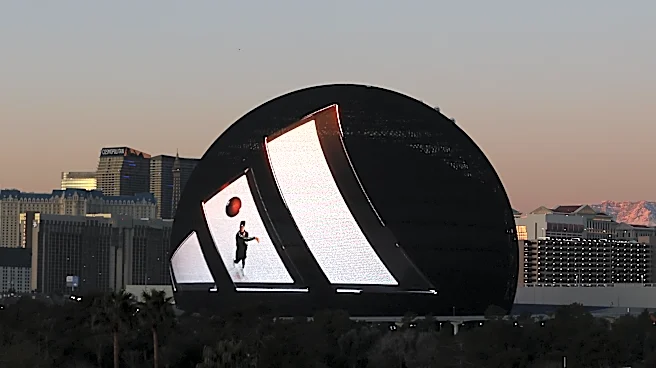
an adjusted per-share loss of 98 cents, compared to the Zacks consensus of a $1.79 loss. Following the report, shares rose nearly 8% by midday. Executive Chairman and CEO James Dolan stated that the Sphere segment is on track for substantial growth this calendar year, with plans for a global network of venues and new original content. The 'Wizard of Oz' experience continues to be a significant revenue driver, having exceeded $500 million in sales and over 4 million tickets sold since its August 2025 debut. Revenues for the Sphere Experience vertical increased by $13.1 million year-over-year due to more performances and higher per-show revenues. Sphere's revenue alone reached $198.9 million, a $24.8 million increase from the previous year, boosted by the rise in Experiences revenue and increased event-related revenue from a higher concert count. In contrast, the MSG family of regional sports networks saw a 15% decrease in revenues due to a 15.5% drop in subscribers.
Why It's Important?
This strong financial performance by Sphere Entertainment highlights the significant impact of innovative entertainment venues on the U.S. leisure and tourism industry. The success of the Las Vegas Sphere, particularly its 'Wizard of Oz' experience, demonstrates a robust demand for immersive, high-tech entertainment, which can attract substantial consumer spending and drive economic activity in host cities. The company's plans for global expansion and a diverse content slate suggest a potential for sustained growth and increased market share in the entertainment sector. The decline in revenue for MSG Networks, however, underscores the ongoing challenges faced by traditional regional sports networks in a rapidly evolving media landscape, where streaming services and changing consumer habits are impacting subscriber numbers. This divergence in performance within Sphere Entertainment's portfolio illustrates the broader industry trend of traditional media struggling while experiential entertainment thrives, influencing investment decisions and strategic shifts across the entertainment and media industries.
What's Next?
Sphere Entertainment plans to continue its global expansion, with construction of a Sphere venue in Abu Dhabi underway and procurement for key contracts in progress, aiming for completion by the end of 2029. The company is also advancing plans for its next U.S. Sphere project, with an announcement expected in the coming months. On the content front, production for 'The Rocky Horror Picture Show' is well underway, expected to debut by the end of March, expanding the Sphere's content slate to a new genre and increasing the number of Sphere Experience showings. The company is also exploring ways to repurpose content from 'From the Edge' and continues discussions with Hollywood studios for future Sphere Experiences using existing intellectual property. Sphere Entertainment anticipates continued growth in 2027, driven by maximizing revenue from the Exosphere, diverse content, and concert residencies, aiming for year-round utilization of its venues.
Beyond the Headlines
The success of the Sphere in Las Vegas, particularly its ability to generate substantial revenue from unique immersive experiences, signals a potential paradigm shift in the entertainment industry. This model emphasizes high-tech, sensory-rich environments that offer more than traditional live performances, potentially setting a new standard for audience engagement and revenue generation. The company's focus on developing proprietary content and leveraging AI for 'up-resing' older content for its massive screen highlights the increasing integration of technology in creative production. This approach could lead to a re-evaluation of intellectual property rights and content monetization strategies in the digital age. Furthermore, the contrast between the Sphere's booming success and the decline of MSG Networks illustrates a broader economic and cultural shift towards experiential consumption over traditional media consumption, posing long-term questions about the future of linear television and the evolving preferences of consumers.