





What's Happening?
Entergy Louisiana is currently undergoing a multiday regulatory hearing concerning its proposal to construct power plants for Meta's Hyperion campus in Richland Parish. Meta's data center is projected to consume 4,500 megawatts, which is approximately
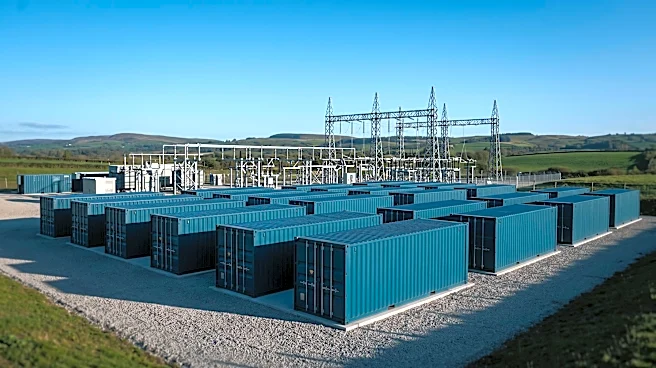
four times the power usage of New Orleans. The overall expansion of Meta's data center is estimated to cost $50 billion. Entergy's proposed settlement with the Public Service Commission staff would allow the utility to build seven new gas-fired power plants, three battery storage systems, and other necessary infrastructure. This plan would bypass the typical bid process, which is usually required to ensure that the utility selects the most cost-effective options. Entergy CEO Phillip May emphasized the importance of 'speed to power' in securing economic opportunities for communities. Opponents, including the Alliance for Affordable Energy, the Sierra Club, and the Union of Concerned Scientists, have raised concerns that residents might bear the cost of unneeded power if Meta terminates its 20-year contract. The Advocate reported that three of the proposed plants would be depreciated over 32 years, potentially leaving customers responsible for billions of dollars if Meta leaves after 20 years. Chief Administrative Law Judge Melanie Verzwyvelt is overseeing the case, with the elected commission expected to vote later this year.
Why It's Important?
This regulatory hearing is significant for several reasons, particularly concerning energy policy, consumer costs, and the economic development landscape in Louisiana. The potential approval of Entergy's plan without a competitive bidding process could set a precedent for future large-scale energy projects, potentially impacting transparency and cost-efficiency for ratepayers. If Meta were to leave after its 20-year contract, the financial burden of depreciating assets, specifically the gas-fired power plants, could fall on Louisiana residents, leading to higher utility bills. This situation highlights the tension between attracting major tech investments and protecting consumer interests. Furthermore, the immense power demands of AI data centers, exemplified by Meta's Hyperion campus, underscore a growing national challenge in energy infrastructure. The debate over who pays for this increased demand and how it is generated (e.g., gas-fired plants versus renewable sources) will shape future energy policies and environmental regulations. The outcome of this hearing could influence how other states approach similar large-scale industrial developments and their associated energy needs.
What's Next?
The regulatory hearing is ongoing, with Chief Administrative Law Judge Melanie Verzwyvelt presiding over the case. The elected Public Service Commission is expected to vote on Entergy's proposal later this year. This vote will determine whether Entergy can proceed with building the seven new gas-fired power plants, three battery storage systems, and other infrastructure without the standard bidding process. The decision will likely face scrutiny from environmental groups and consumer advocates, who have already voiced concerns about potential cost burdens on residents and the long-term environmental impact of gas-fired plants. Depending on the commission's decision, there could be further legal challenges or appeals from either Entergy or the opposing groups. Additionally, the outcome will be closely watched by other states and utility companies considering similar partnerships with large tech firms, as it could establish a model for how such massive energy demands are met and financed in the future. The broader implications for Louisiana's energy grid and economic development strategy will unfold in the coming months and years.
Beyond the Headlines
The situation surrounding Entergy Louisiana and Meta's Hyperion campus extends beyond immediate regulatory approvals, touching upon deeper ethical and economic considerations. The push to bypass standard bidding processes for energy infrastructure, justified by the need for 'speed to power' to attract major tech investments, raises questions about the long-term implications for market fairness and consumer protection. This scenario highlights a growing national trend where the rapid expansion of AI data centers is placing unprecedented strain on existing energy grids and demanding significant new power generation. The debate over who ultimately bears the financial risk—the utility, the tech giant, or the ratepayers—underscores a critical policy challenge. Furthermore, the reliance on gas-fired power plants for such a large-scale project, despite growing environmental concerns, points to a potential conflict between economic development goals and climate objectives. This case could influence future discussions on sustainable energy sourcing for the tech industry and the role of regulatory bodies in balancing economic incentives with environmental stewardship and consumer welfare. It also brings to light the increasing power of large tech companies to shape regional energy landscapes.