




What's Happening?
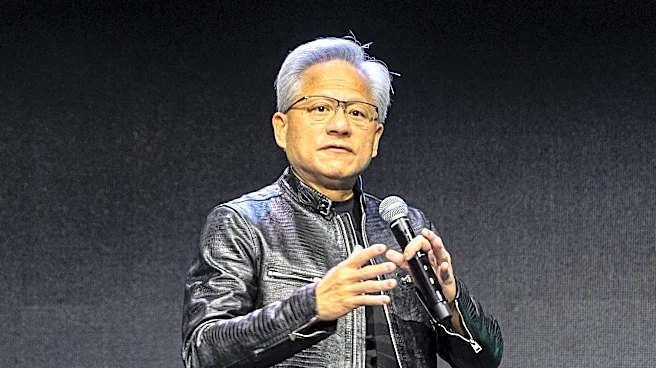
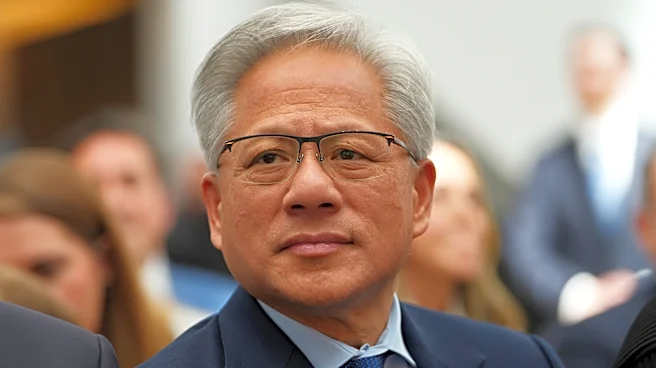
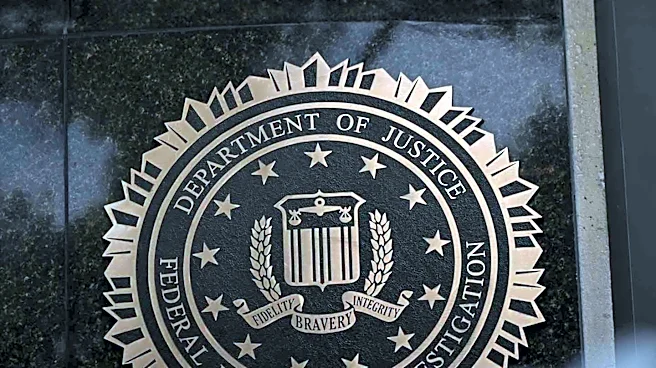
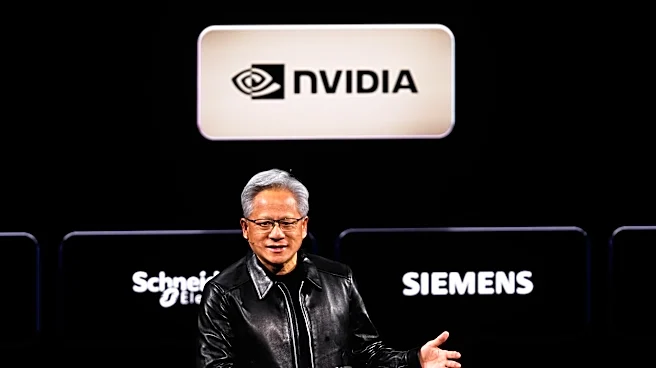
President Trump confirmed that the FBI is investigating Nvidia CEO Jensen Huang's alleged affair with a suspected Chinese government agent. President Trump stated he spoke with Huang, who claimed he had no knowledge of the individual being a spy. Huang has
publicly acknowledged the affair and issued an apology to his wife and company. The New York Times reported that US intelligence determined the woman was gathering information for Beijing. Nvidia has initiated an independent investigation into reports that Huang was the 'target of a foreign intelligence effort.' This development has drawn congressional scrutiny, with Senator Mark Warner and Representative Hakeem Jeffries expressing interest in further investigation, particularly regarding its implications for US national security and the technology sector.
Why It's Important?
This investigation carries significant implications for US national security, the technology industry, and US-China relations. Nvidia is a critical player in the artificial intelligence sector, with its specialized chips powering many leading AI developers. The potential compromise of a high-profile CEO by a foreign agent raises serious concerns about intellectual property theft, technological espionage, and the vulnerability of key US industries. If sensitive information related to AI technology was indeed compromised, it could have long-term strategic consequences for the US's competitive edge in AI development. The incident also highlights the persistent counterintelligence threat posed by foreign powers, particularly China, and the challenges of safeguarding critical technologies. For Nvidia, the scandal could impact its reputation, stock value, and its ability to navigate US export restrictions on chip sales to China.
What's Next?
The FBI investigation is ongoing and could take years, not necessarily culminating in criminal charges. Congressional scrutiny is expected to intensify, with calls for full briefings on the matter. President Trump is scheduled to meet with Chinese leader Xi Jinping, but he was noncommittal about raising the issue directly. Nvidia's internal investigation will also proceed, and its findings could influence the company's leadership and security protocols. The incident may lead to increased vigilance and stricter security measures within the US tech sector, particularly for companies involved in critical technologies like AI. It could also prompt a re-evaluation of policies regarding foreign influence and espionage targeting US corporate executives.
Beyond the Headlines
This event transcends a typical corporate scandal, touching upon the ethical and geopolitical dimensions of personal conduct in an era of intense technological competition. It underscores the vulnerability of individuals, even those in powerful positions, to foreign intelligence operations. The alleged use of personal relationships for espionage highlights a sophisticated and insidious form of intelligence gathering that goes beyond traditional cyberattacks. Furthermore, the incident could fuel a broader debate about the balance between open innovation and national security, particularly in rapidly evolving fields like AI. It also raises questions about the extent to which personal lives of corporate leaders can become national security concerns, potentially leading to increased scrutiny and vetting of executives in critical industries. The Chinese government's denial of involvement, while expected, further complicates the narrative and underscores the ongoing information warfare between the two global powers.