







What's Happening?
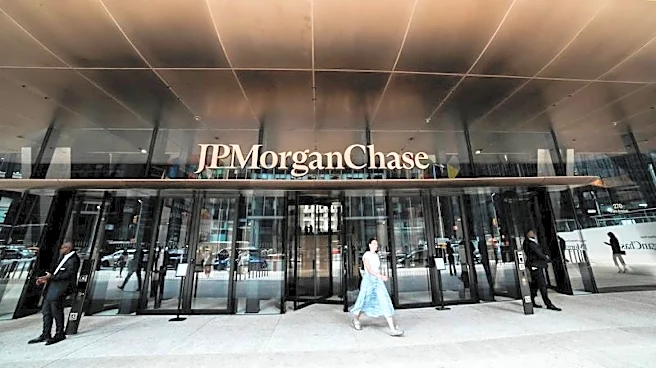
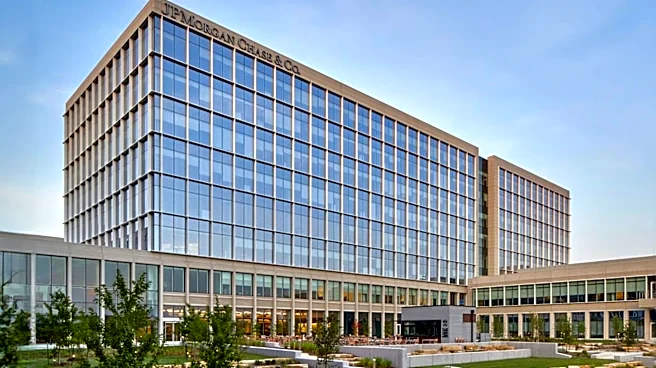
JPMorgan Chase has filed a new Worker Adjustment and Retraining Notification (WARN) with New Jersey employment regulators, detailing plans to eliminate 63 positions at its Jersey City location. These job cuts began on August 19 and are scheduled to continue
until November 15. This marks the fifth such filing by the financial institution this year, bringing the total number of job reductions at the Jersey City facility to 541 workers. The banking institution has been systematically phasing in workforce adjustments across its New Jersey operations throughout the calendar year. According to Michael Fusco, a spokesperson for JPMorgan Chase, these moves are part of the company's regular business management, involving reviews of business needs and adjustments to staffing, which includes creating new roles where necessary and reducing positions when appropriate.
Why It's Important?
The ongoing job reductions at JPMorgan Chase's Jersey City office are significant for the local economy and the financial services sector. The cumulative loss of over 500 jobs in a single year from one major employer can have a noticeable impact on the local job market and potentially on related businesses in the area. This trend reflects broader shifts within the banking industry, where technological advancements, particularly in artificial intelligence (AI), are influencing staffing decisions. While a JPMorgan Chase spokesperson stated these are standard business adjustments, CEO Jamie Dimon has previously acknowledged that AI has helped the bank reduce headcount by up to 40% in some business areas. This highlights a growing concern about the long-term impact of AI on employment in the financial sector, even as Dimon himself expressed skepticism that AI would provide a lasting competitive advantage or significantly boost profit margins due to widespread adoption by competitors. The WARN Act, which mandates 60 days' notice for large-scale layoffs, ensures transparency and provides employees with time to prepare for job transitions.
What's Next?
The current round of job eliminations at JPMorgan Chase's Jersey City office is set to conclude by November 15. Given the bank's stated practice of regularly reviewing business needs and adjusting staffing, it is possible that further workforce adjustments could occur in the future, though no specific plans beyond the current WARN notice have been announced. The ongoing integration of AI into banking operations suggests a continued evolution in the types of roles required within the industry, potentially leading to a shift in skill demands for employees. Employees affected by these layoffs will likely seek new employment opportunities, potentially impacting the local talent pool and increasing competition for available positions. The broader financial industry will continue to monitor the balance between technological adoption, cost efficiency, and workforce management, as other companies also adapt to similar pressures and opportunities presented by AI and other innovations.
Beyond the Headlines
The repeated layoff notices from a major financial institution like JPMorgan Chase underscore a significant transformation occurring within the banking industry, driven by technological advancements, particularly artificial intelligence. While these job reductions are framed as routine business management, they signal a deeper shift in how financial services are delivered and managed. The ethical implications of AI-driven job displacement are a growing concern, prompting discussions about reskilling the workforce, the future of work, and the potential for increased economic inequality if job creation in new sectors does not keep pace with job losses in traditional ones. Furthermore, the comments from CEO Jamie Dimon, despite acknowledging AI's role in headcount reduction, also highlight the competitive landscape where AI adoption is becoming a necessity rather than a unique advantage. This suggests that while AI can streamline operations and reduce costs, its ultimate impact on profit margins and market differentiation remains a complex and evolving challenge for the industry as a whole.