



What's Happening?
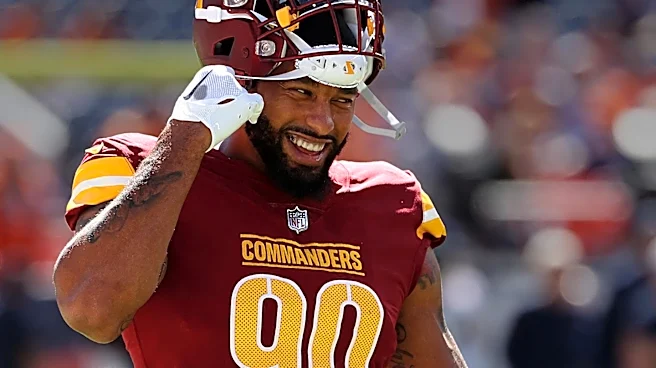
The Washington Commanders have quietly reinstated the line 'Braves on the warpath!' into their fight song, four years after its removal to align with the team's new name. This change, which occurred before a preseason opener, was largely unnoticed by
fans initially. Team president Mark Clouse stated that the alteration was made because fans struggled with the previous version of the song. This move is part of a broader effort by the new ownership group, led by managing partner Josh Harris, to honor the franchise's past. The team has also brought back signature gold pants, revealed plans for a new statue for Sean Taylor, installed an in-stadium tribute to Walter 'Blackie' Wetzel, and developed an alternate helmet with a spear logo. While the ownership group has committed to the Commanders name and stated the old name will not return, these actions have renewed speculation and concern, particularly among Native American communities.
Why It's Important?
The reintroduction of 'Braves on the warpath!' and other nods to the past by the Washington Commanders carry significant implications for brand identity, cultural sensitivity, and public relations in U.S. sports. The original name was deemed derogatory by many Native Americans, leading to its change in 2020 after pressure from sponsors and social justice movements. The current actions, while intended to honor the team's history and appeal to long-time fans, risk alienating Native American advocacy groups who view such imagery as harmful and perpetuating stereotypes. The Association on American Indian Affairs has condemned the sale of merchandise bearing the former name and Native imagery, emphasizing that Native cultures are not brands to be revived for profit. This situation highlights the ongoing tension between preserving historical team identity and evolving societal standards of inclusivity and respect, impacting the team's reputation and potentially its commercial partnerships.
What's Next?
The Washington Commanders' continued efforts to balance honoring their past with their current brand identity will likely face ongoing scrutiny. The team's ownership group, led by Josh Harris, has affirmed their commitment to the Commanders name, but their actions, such as selling merchandise with the old name and logo to maintain trademark registration, suggest a complex strategy. This approach could lead to further criticism from Native American organizations and potentially from sponsors who previously pushed for the name change. The team's registration of the old trademarks expires in 2028, with renewal possible as early as next year, which will require submitting examples of the mark in use. This legal requirement could necessitate further sales of old merchandise, perpetuating the controversy. The franchise will need to carefully navigate these issues to avoid alienating key stakeholders while attempting to satisfy a divided fanbase.
Beyond the Headlines
The Commanders' situation reflects a broader societal debate in the U.S. regarding historical symbols, cultural appropriation, and corporate responsibility. The team's struggle to reconcile its past identity with contemporary values underscores the challenges faced by institutions with controversial legacies. The decision to reintroduce elements of the former brand, even subtly, highlights the deep emotional connection fans have to team history, particularly during periods of success. However, it also exposes the ethical dilemma of profiting from imagery deemed offensive by a significant community. This ongoing tension can trigger long-term shifts in how sports franchises manage their brand, emphasizing the need for genuine engagement with affected communities rather than merely legal or commercial considerations. The case serves as a microcosm of modern America's struggle to confront and redefine its historical narratives in a diverse and evolving society.