



What's Happening?
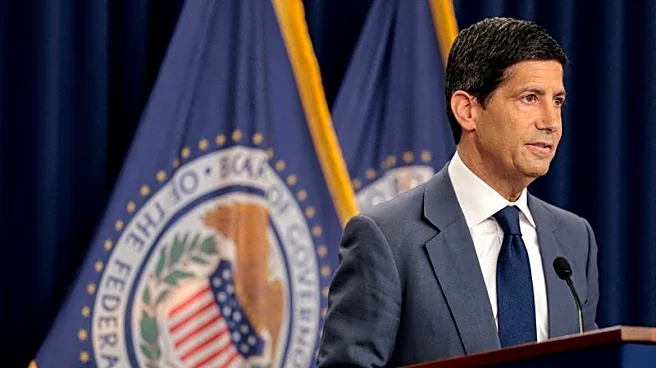
Federal Reserve Governor Michael Barr issued a warning on Monday regarding the potential risks that artificial intelligence (AI) poses to the financial system. His concerns, delivered in Milan, Italy, build upon a recent central bank report that highlighted
a surge in worries about AI's impact on financial stability. The Fed's latest Financial Stability Report indicated that 87% of surveyed contacts identified AI as a significant risk. Barr elaborated on these concerns, pointing to the potential for AI to disrupt trading through herd-like behavior, manipulate markets via self-learning algorithms, and create cybersecurity vulnerabilities. He also raised the issue of banks being unable to verify the authorization of AI agents acting on behalf of retail customers, and the possibility of legitimate AI agents accelerating bank runs due to their speed. Barr emphasized the challenges AI developers face in ensuring models are well-controlled, precise, explainable, and replicable, and stressed the need to mitigate risks such as AI reinforcing biases in consumer lending, collusion, market manipulation, and systemic risk in financial markets.
Why It's Important?
The warnings from Federal Reserve Governor Michael Barr underscore a growing concern among U.S. financial regulators about the rapid integration of AI into critical financial operations. The potential for AI-driven market disruptions, including herd behavior and algorithmic manipulation, could lead to significant volatility and even systemic risk, impacting investors, financial institutions, and the broader U.S. economy. Cybersecurity threats, amplified by AI-enabled attackers, could compromise sensitive financial data and infrastructure. Furthermore, the risk of AI reinforcing biases in consumer lending could exacerbate existing inequalities and lead to regulatory scrutiny. The challenges in ensuring AI models are transparent and controllable highlight a critical need for robust governance frameworks to protect consumers and maintain market integrity. The implications extend beyond financial stability, touching upon ethical considerations and the need for responsible innovation within the U.S. financial sector.
What's Next?
The concerns raised by Governor Barr suggest that U.S. financial regulators, including the Federal Reserve, will likely intensify their focus on developing and implementing regulatory frameworks for AI in finance. This could involve new guidelines, stress tests, or supervisory expectations for financial institutions utilizing AI. The upcoming conference at the San Francisco Fed, featuring AI developers, business leaders, and academics, indicates a broader dialogue is underway to understand AI's implications for productivity, jobs, and the economy. This collaborative approach may lead to the development of industry best practices and standards for AI deployment. Financial institutions will likely face increased pressure to demonstrate that their AI models are secure, unbiased, and do not pose undue risks to market stability or consumer protection. The ongoing discussions and potential regulatory actions will shape how AI is integrated into the U.S. financial system in the coming years.
Beyond the Headlines
Beyond the immediate financial risks, Governor Barr's remarks touch upon deeper ethical and societal implications of AI. The concern about AI reinforcing biases in consumer lending highlights the potential for algorithmic discrimination, which could perpetuate and even amplify existing social inequalities. This raises fundamental questions about fairness, accountability, and the design of AI systems in sensitive areas like finance. The challenge of ensuring AI models are 'explainable' points to the 'black box' problem, where the decision-making processes of complex AI can be opaque, making it difficult to identify and rectify errors or biases. This lack of transparency could erode public trust in financial institutions and regulatory bodies. The rapid pace of AI development also presents a regulatory dilemma: how to foster innovation while simultaneously mitigating unforeseen risks. This ongoing tension will likely drive a complex interplay between technological advancement, ethical considerations, and regulatory oversight in the U.S. financial landscape.