





What's Happening?
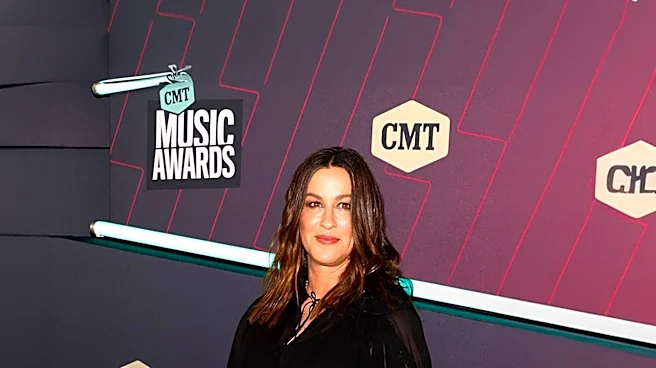
Canadian singer-songwriter Alanis Morissette recently appeared on the 'Call Her Daddy' podcast, hosted by Alex Cooper, to discuss her past experiences with toxic relationships. Morissette, born in 1974, revealed that for many years she suppressed her own
identity and needs, making her a prime target for narcissistic individuals. She described herself as a highly empathetic person who, in these relationships, would lose herself and prioritize understanding and justifying the other person's actions. Morissette, who has been married to American rapper Souleye since 2010, emphasized how she would constantly try to comprehend and rationalize the behavior of her partners, often at the expense of her own well-being. This self-negation, she explained, led her to become a perfect match for narcissistic men, providing them with sustenance while her own existence faded.
Why It's Important?
Morissette's candid discussion on a widely popular platform like 'Call Her Daddy' highlights the pervasive issue of toxic relationships and the vulnerability of empathetic individuals. Her story resonates with many who may find themselves in similar dynamics, offering a public figure's perspective on a deeply personal struggle. This conversation can contribute to a broader understanding of relationship dynamics, particularly the challenges faced by those with high empathy when interacting with narcissistic personalities. By sharing her experiences, Morissette helps to destigmatize discussions around emotional abuse and self-worth in relationships, potentially encouraging listeners to recognize and address unhealthy patterns in their own lives. The podcast's reach ensures that this message can impact a significant audience, fostering greater awareness and self-reflection regarding personal boundaries and emotional health.
What's Next?
The discussion initiated by Alanis Morissette on 'Call Her Daddy' is likely to spark further conversations among listeners and in online communities about toxic relationships, empathy, and narcissism. Experts, such as psychologists and therapists, may use Morissette's account as a case study to illustrate the complexities of these dynamics and offer guidance. The podcast itself may feature follow-up discussions or invite other guests to delve deeper into these topics. For individuals who identify with Morissette's experiences, this could be a catalyst for seeking support, whether through therapy, support groups, or educational resources on healthy relationship boundaries. The ongoing dialogue could also influence content creators and media outlets to produce more nuanced and informative discussions on mental health and relationship well-being.
Beyond the Headlines
Morissette's revelation touches upon a deeper societal issue concerning the perception and value of empathy. While often seen as a positive trait, her experience underscores how unchecked empathy can become a vulnerability, particularly in relationships with manipulative individuals. This raises questions about how society educates individuals, especially young people, on developing healthy boundaries while maintaining their empathetic nature. The cultural narrative often glorifies self-sacrifice in relationships, which can inadvertently enable toxic dynamics. Morissette's story challenges this narrative, advocating for a balance where self-preservation and personal needs are equally prioritized. It also highlights the psychological toll of consistently prioritizing others' needs over one's own, leading to a loss of self and identity. This broader implication calls for a re-evaluation of how empathy is understood and practiced in interpersonal relationships.