
What's Happening?
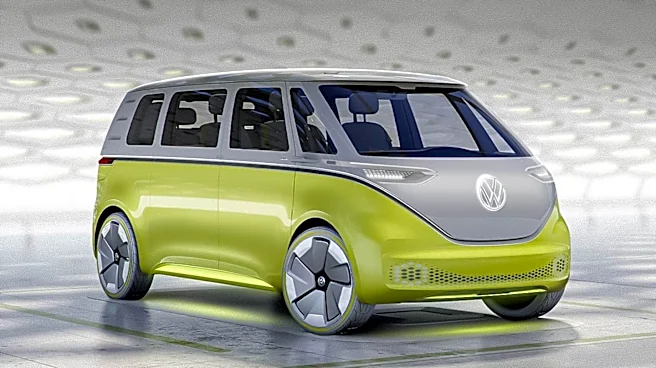
Volkswagen has announced a delay in the return of its battery-powered ID. Buzz van to the U.S. market. Originally slated for a fall 2026 release as part of the 2027 model year, the modern-day minibus will
now not be available stateside until the first half of next year at the earliest. This decision was communicated to VW's American dealers earlier this week and means the vehicle will have been absent from the U.S. lineup for at least two consecutive model years. The delay is intended to allow Volkswagen to introduce several "customer-focused" improvements to the ID. Buzz. These enhancements include North American Charging Standard compatibility, a revised software experience, digital key integration, and a new Tourer trim package designed for adventure-minded buyers. A spokesperson for VW American stated that these updates aim to elevate the ownership experience and strengthen the vehicle's appeal.
Why It's Important?
The delay of the Volkswagen ID. Buzz's return to the U.S. market has several significant implications for both Volkswagen Group of America and the broader electric vehicle (EV) landscape. For Volkswagen, it means missing out on potential sales in a competitive and rapidly evolving EV market, especially during a period when consumer interest in electric vans and unique vehicle designs is growing. The decision to implement customer-focused enhancements suggests that Volkswagen is responding to previous market feedback, which indicated that initial interest in the ID. Buzz was hampered by its high price, limited driving range, and external factors like import tariffs and the elimination of federal EV tax credits. This delay could impact Volkswagen's market share in the U.S. EV segment and potentially allow competitors to gain ground. For consumers, it means a longer wait for a highly anticipated vehicle, but also the promise of a more refined and feature-rich product upon its eventual release, including crucial North American Charging Standard compatibility.
What's Next?
Volkswagen Group of America will now focus on finalizing the planned enhancements for the ID. Buzz, including integrating North American Charging Standard compatibility, refining the software experience, and implementing digital key integration. The company will also prepare for the launch of the new Tourer trim package. In the coming months, Volkswagen is expected to share additional details about the updated ID. Buzz and its official U.S. launch timeline. The success of the ID. Buzz upon its delayed return will depend heavily on how well these improvements address previous criticisms and how effectively Volkswagen can market the updated vehicle. The company will need to rebuild anticipation and demonstrate a clear value proposition to U.S. consumers. Furthermore, the performance of the ID. Buzz in the U.S. market could influence Volkswagen's decisions regarding other niche EV models, such as the ID. California Cruise camper van, which is currently exclusive to Europe.
Beyond the Headlines
The repeated delays and previous withdrawal of the ID. Buzz from the U.S. market highlight the complexities and challenges of launching and sustaining electric vehicles, particularly those with a unique design and higher price point. The initial struggles of the ID. Buzz, attributed to factors like its cost, range, and external economic pressures, underscore the importance of market-specific product development and strategic pricing in the EV sector. The decision to delay for further enhancements, including North American Charging Standard compatibility, reflects a growing industry trend towards standardization and consumer convenience in EV charging infrastructure. This move could set a precedent for other foreign automakers entering or re-entering the U.S. EV market, emphasizing the need to tailor products to local standards and consumer expectations. The ID. Buzz's journey also serves as a case study in how political and economic factors, such as import tariffs and tax credit changes, can significantly impact an automaker's product strategy and market success.