


What's Happening?
Kia has filed a patent for an innovative car seat featuring a hidden robotic arm designed to automatically clean spills. The system utilizes an overhead camera to detect messes on the car seat. Once a spill is identified and the vehicle is off with no passengers,
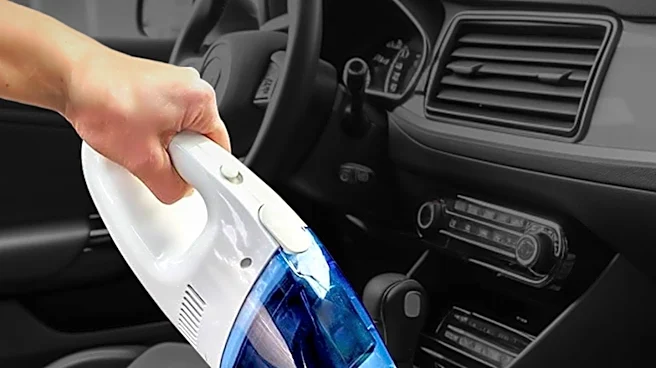
the robotic arm extends from beneath the seat to perform cleaning actions. This includes scraping, spraying cleaning liquid, wiping with a cloth towel, and vacuuming, depending on the type of mess detected. The car's onboard computer, or controller, uses image analysis and deep learning to classify the spill as a liquid, thick fluid, or solid, and then determines the appropriate cleaning method. The patent highlights the system's ability to clean stains before they set, particularly beneficial for light-colored seats and shared vehicles.
Why It's Important?
This patent signifies a potential advancement in automotive interior maintenance and could significantly impact the user experience for car owners, especially those with families or who frequently consume food and beverages in their vehicles. For the automotive industry, it represents a step towards more autonomous and convenient vehicle features, potentially setting a new standard for interior design and functionality. The technology could reduce the need for manual cleaning, preserving the aesthetic and resale value of vehicle interiors. Furthermore, for shared mobility services like ride-sharing or car rentals, this innovation could ensure a consistently clean interior for subsequent passengers, enhancing customer satisfaction and operational efficiency by minimizing cleaning downtime between uses. It also showcases Kia's commitment to integrating advanced robotics and AI into practical automotive applications.
What's Next?
As this is currently a patent application, the immediate next step would involve the patent undergoing examination and potential approval. If approved, Kia would then need to develop and test prototypes of this self-cleaning car seat system. The company would face challenges in integrating the hardware without compromising passenger legroom or adding significant weight and cost. Refinements would also be needed for the system's reliability and durability over time, as well as practical considerations like refilling cleaning liquid and emptying waste containers. Should development proceed successfully, this technology could eventually be introduced in future Kia models, potentially starting with higher-end vehicles before becoming more widespread. Other automotive manufacturers might also explore similar solutions in response to this innovation.
Beyond the Headlines
The development of a self-cleaning car seat touches upon broader implications beyond mere convenience. Ethically, it raises questions about the extent of automation in personal spaces and the potential for over-reliance on technology for mundane tasks. Legally, there could be considerations regarding liability if the system malfunctions or causes damage. Culturally, it reflects a growing societal expectation for effortless maintenance and pristine environments, even in mobile settings. This innovation could also contribute to a long-term shift in how vehicle interiors are designed, moving towards materials and systems that are inherently easier to maintain. It underscores the trend of vehicles becoming more integrated with smart technologies, transforming them from simple modes of transport into sophisticated, self-sufficient environments.