






What's Happening?
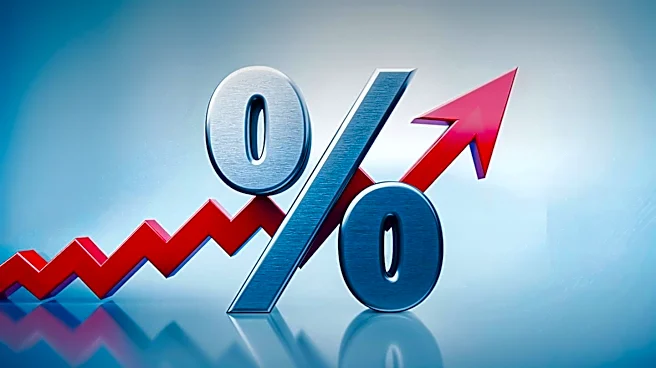
As of October 22, 2026, the average 30-year fixed mortgage rate stands at 7.32%, a slight decrease from the previous week's 7.40%, which marked the highest level since late 2023. This figure, reported by Freddie Mac, is more than a full percentage point
higher than the 6.19% average recorded a year prior. The 15-year fixed mortgage rate averaged 6.68%. This trend in mortgage rates is closely linked to the bond market, where ten-year Treasury yields surpassed 5% in late September due to inflation concerns and a global government-debt sell-off. The current high rates are influencing potential homebuyers, particularly in markets like Jackson Hole, where buyers are contemplating whether to proceed with purchases or wait for rates to decline. The market is characterized by limited inventory, and waiting for lower rates could mean missing out on desired properties.
Why It's Important?
The sustained high mortgage rates have significant implications for the U.S. housing market and potential homebuyers. For individuals considering a home purchase, particularly for high-value properties, the difference of even one percentage point in interest rates can translate to substantial monthly payment variations. For instance, a one-point drop in the rate on a $2.5 million home with 25% down could save approximately $1,250 per month. However, waiting for rates to fall carries the risk of home prices increasing, potentially offsetting any savings from lower interest rates. This dynamic creates a dilemma for buyers: secure a home now at a higher rate or risk higher prices and increased competition if rates eventually drop. The current environment also encourages alternative buying strategies, such as paying cash and refinancing later, or negotiating rate buydowns with sellers.
What's Next?
The future trajectory of mortgage rates remains uncertain, with no clear indication of when or if they will significantly decrease. Industry experts suggest that rates are unlikely to return to the 5% or 3% range seen during the pandemic, as those were exceptional circumstances. The Federal Reserve's stance on maintaining current rates and its projections for no rate cuts in 2027 further support the expectation that mortgage rates will likely hover around the 7% range. This outlook means that potential homebuyers will need to adapt to the current rate environment. Strategies such as exploring adjustable-rate mortgages, shopping for jumbo lenders, and planning for future refinancing will likely become more prevalent as buyers navigate the market. The decision to wait for lower rates could lead to increased competition and potentially higher home prices, making immediate action a consideration for those who can afford current payments.
Beyond the Headlines
The current mortgage rate environment highlights a broader shift in the housing market, moving away from the historically low rates that characterized the pandemic era. This shift has ethical and economic implications, particularly for first-time homebuyers or those with limited financial flexibility. The 'cost of waiting' extends beyond just financial calculations; it also involves the emotional toll of uncertainty and the potential loss of desired properties in competitive markets. The reliance on strategies like cash purchases or rate buydowns suggests a market that increasingly favors buyers with significant capital or strong negotiation skills. This could exacerbate existing inequalities in homeownership, making it more challenging for a broader segment of the population to enter the housing market. The long-term impact could be a recalibration of homeownership expectations and a greater emphasis on financial planning and adaptability in a fluctuating interest rate landscape.