







What's Happening?
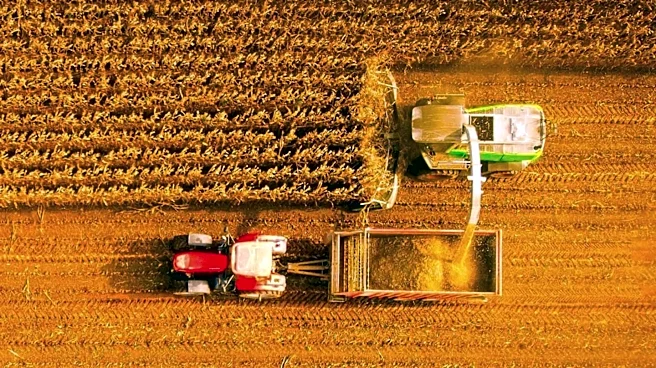
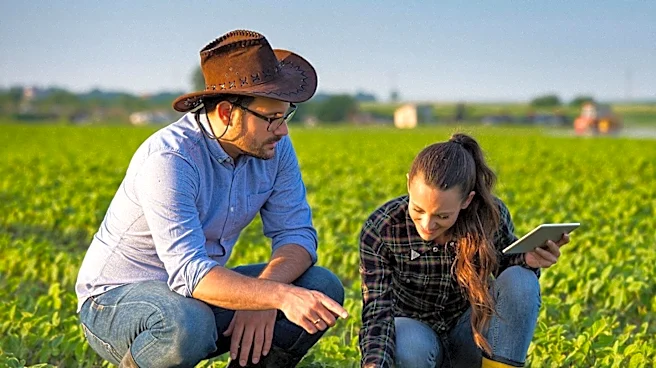
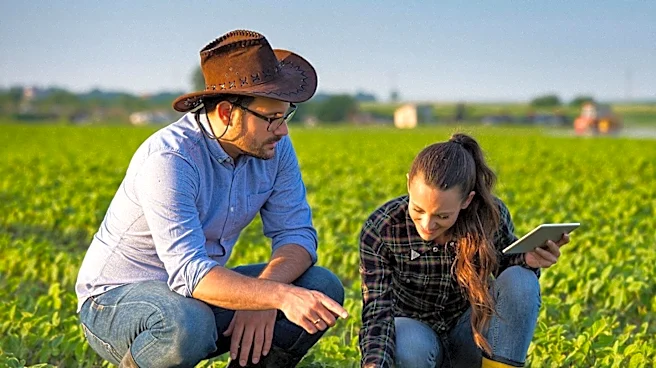
The integration of 5G technology in agriculture is transforming traditional farming practices by enabling precision farming and real-time data insights. The global market for 5G in agriculture is projected to grow significantly, driven by the need for efficient
resource management and increased productivity. Key applications include smart sensors, automated irrigation, and autonomous drones, which allow for precise monitoring and management of crops and livestock. This technological advancement is particularly impactful in regions like North America and Asia-Pacific, where large-scale farming and food security are critical.
Why It's Important?
The adoption of 5G in agriculture represents a major shift towards more sustainable and efficient farming practices. By providing real-time data and connectivity, 5G enables farmers to make informed decisions, reduce waste, and optimize resource use. This is crucial in addressing global challenges such as climate change, food security, and resource scarcity. The technology also supports the development of smart farming initiatives, which are essential for feeding a growing global population. As 5G becomes more accessible, it is expected to play a pivotal role in the future of agriculture.
What's Next?
As the 5G agricultural market continues to expand, challenges such as the high cost of upgrading equipment and deploying infrastructure in rural areas need to be addressed. Ongoing collaborations between telecom operators, tech providers, and agricultural businesses are essential to overcome these hurdles. Governments are likely to play a key role in supporting the adoption of 5G through policy initiatives and investments. The continued development of 5G technology will likely lead to further innovations in precision agriculture, enhancing global food security and sustainability.