



What's Happening?
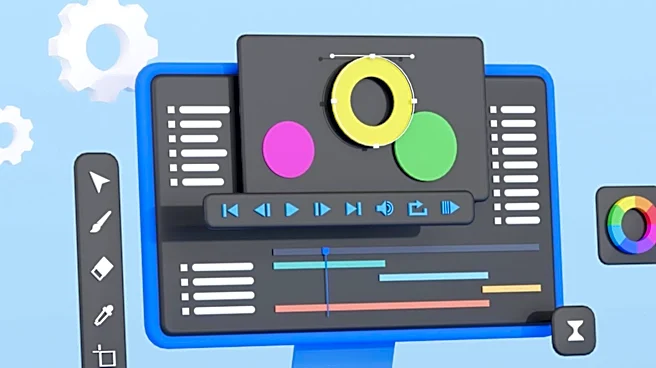
A new AI 3D animation generator is providing users with capabilities to create 3D animated content from text and image prompts. This technology allows for the development of 3D animated storytelling, social media content, and educational visuals. Users
can describe characters, objects, scenes, movements, and visual details through text or upload images as references for appearance, shapes, and colors. The generator aims to simplify the creation of expressive characters, imaginative environments, and engaging visual sequences for various digital projects, including short films and marketing campaigns. It also supports the creation of 3D character animations for games and short videos, as well as 3D product animations to highlight product features for presentations and promotional materials. The platform allows users to preview and export their creations in supported formats after making final adjustments for movement and visual consistency.
Why It's Important?
This AI 3D animation generator is significant for its potential to democratize 3D content creation, making it accessible to a broader range of creators beyond traditional animation studios. For U.S. industries, this could lead to increased efficiency and reduced costs in marketing, education, and entertainment sectors. Small businesses and independent creators, who may lack the resources for professional animation software and skilled animators, stand to gain significantly by being able to produce high-quality animated content more easily. This technology could also foster innovation in digital storytelling and visual communication, allowing for more dynamic and engaging content across social media platforms and educational materials. The ability to quickly generate 3D visuals from simple prompts could accelerate content pipelines and enable rapid prototyping of visual ideas, impacting how digital media is produced and consumed.
What's Next?
The continued development and adoption of AI 3D animation generators are likely to lead to more sophisticated tools and broader applications. Future iterations may offer enhanced realism, more complex animation capabilities, and deeper integration with other creative software. We can expect to see an increase in AI-generated 3D content across various platforms, from independent short films to corporate marketing campaigns. As the technology evolves, there may be a shift in the demand for traditional animation skills, with a greater emphasis on prompt engineering and AI tool proficiency. Businesses and educational institutions will likely explore how to best integrate these tools into their workflows and curricula, potentially leading to new job roles focused on AI-driven content creation and management. The accessibility of such tools could also spur a new wave of digital artists and storytellers.
Beyond the Headlines
The rise of AI 3D animation generators brings forth several deeper implications. Ethically, questions may arise regarding the originality and authorship of AI-generated content, particularly as the technology becomes more advanced and capable of producing highly realistic animations. There could be debates about intellectual property rights for content created with AI assistance. Culturally, the ease of creating animated content might lead to an explosion of diverse visual narratives, but also potentially to a saturation of similar-looking content if creators rely too heavily on default AI outputs. Legally, frameworks may need to be developed to address copyright, licensing, and potential misuse of AI-generated visuals, especially in areas like deepfakes or misleading content. This technology could fundamentally alter the creative landscape, shifting the focus from technical execution to conceptualization and prompt design, thereby redefining the role of the artist in the digital age.