






What's Happening?
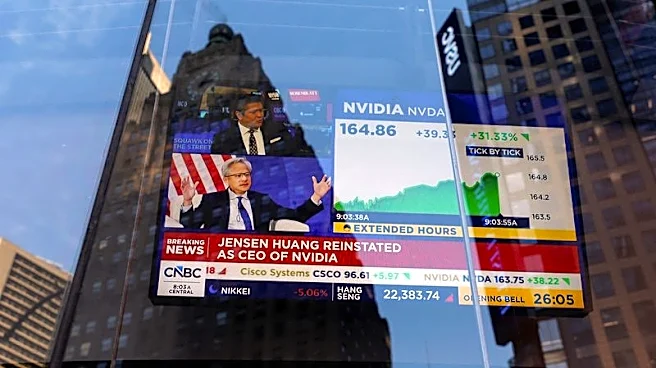
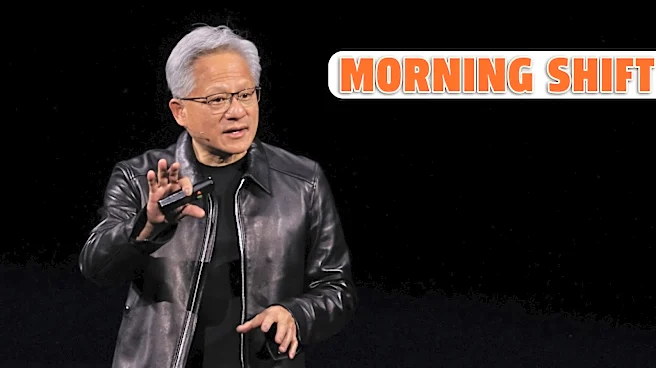
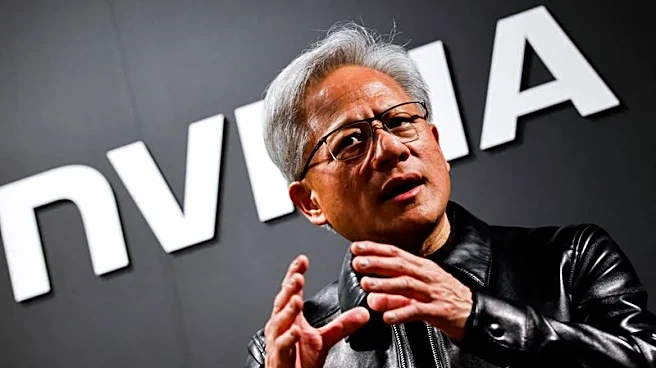
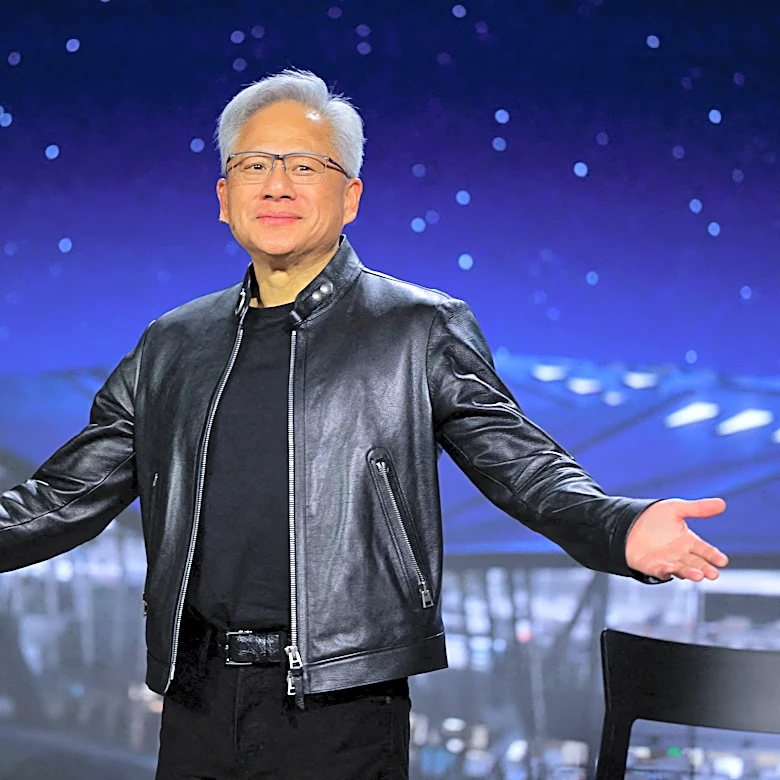
Nvidia's board of directors has unanimously reinstated Jensen Huang as its president and chief executive officer, effective immediately. This decision comes after Huang's resignation two weeks prior, which followed reports of extramarital affairs, including
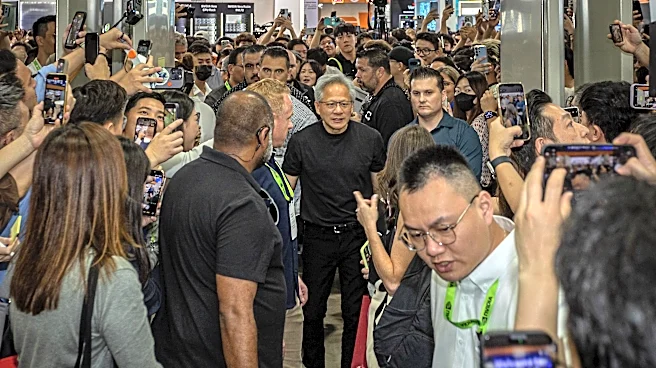
one with a woman U.S. intelligence agencies suspected of being a Chinese spy. President Trump publicly supported Huang's return, confirming his personal intervention with Nvidia's board. Trump stated he believed Huang 'did nothing wrong' and that his return posed no national security risk. The reinstatement led to a significant surge in Nvidia's stock, boosting the S&P 500. Huang expressed his honor to return and thanked employees, shareholders, and partners for their support. This reversal is notable given previous statements from Nvidia's newly installed chairman, Harvey Jones, and interim CEO Collette Kress, who had indicated no intention of reinstating Huang.
Why It's Important?
The reinstatement of Jensen Huang as Nvidia CEO carries significant implications for the technology sector, corporate governance, and U.S. national security. Nvidia is a critical player in the artificial intelligence industry, with its advanced computer chips powering major AI firms and supporting substantial investments in data centers. Huang himself has been a prominent figure and 'unofficial ambassador' for the AI boom. The direct intervention by President Trump in a corporate board decision is highly unusual and raises questions about the separation of government influence and private enterprise. This move could set a precedent for future presidential involvement in corporate leadership matters, particularly in strategically important industries. Furthermore, the ongoing scrutiny from U.S. intelligence agencies regarding Huang's past relationships and the company's compliance with export controls highlights the complex interplay between business interests, national security, and international relations in the tech landscape.
What's Next?
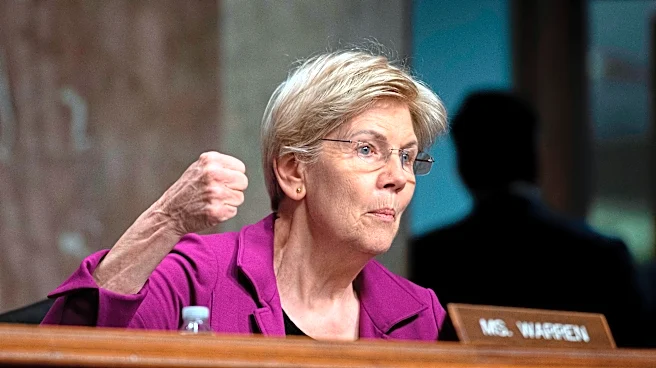
Despite his reinstatement, Jensen Huang and Nvidia face continued scrutiny from various governmental bodies. Huang is scheduled for closed-door interviews with three House committees—the House Permanent Select Committee on Intelligence, the House Foreign Affairs Committee, and the Select Committee on the Chinese Communist Party—on December 1. Nvidia's general counsel is also slated to appear on December 2. The following day, Huang is scheduled to testify at a public hearing before the Senate Banking Committee on 'Protecting America’s AI Advantage,' where he is expected to face tough questions regarding the company's compliance with U.S. export controls and the circumstances surrounding his return. The Securities and Exchange Commission (SEC) is reportedly probing Nvidia's accounting practices, and the California Attorney General's office has confirmed it will continue its investigation into whether Nvidia misled investors and the public. These upcoming appearances and investigations will likely shape public perception and regulatory actions concerning Nvidia and its leadership.
Beyond the Headlines
The circumstances surrounding Jensen Huang's reinstatement at Nvidia delve into deeper issues concerning corporate ethics, national security, and the boundaries of presidential power. The initial reports of Huang's extramarital affairs, particularly with an individual suspected of being a Chinese spy, raise significant ethical and national security concerns for a company at the forefront of critical technology. President Trump's direct intervention, while framed as supporting a 'comeback,' introduces a complex dynamic where political influence potentially overrides traditional corporate governance processes. This situation could lead to broader discussions about the independence of corporate boards, especially in sectors deemed vital for national interest. Critics, such as Yale School of Management professor Jeff Sonnenfeld, have voiced concerns about a 'serious erosion of capitalism' and 'total turmoil and confusion over integrity,' suggesting that such interventions could undermine investor confidence and corporate autonomy in the long term. The ongoing investigations by various government entities underscore the multifaceted challenges companies face when navigating personal conduct, corporate responsibility, and geopolitical sensitivities.