





What's Happening?
Lionsgate is currently not planning a seventh 'Hunger Games' movie despite the significant box office success of 'Sunrise on the Reaping,' which opened to $120 million. The studio's decision hinges entirely on author Suzanne Collins, who maintains creative
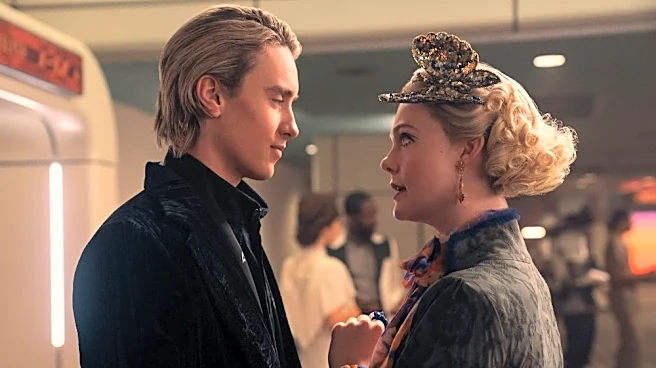
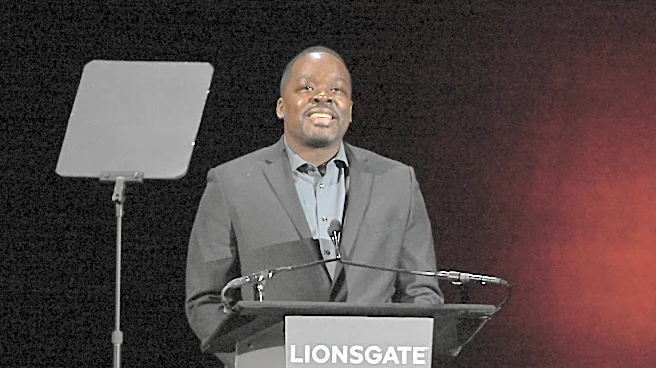
control over the franchise. Lionsgate chairman Adam Fogelson stated that the studio will wait for Collins to write another book when she feels she has an important story to tell, emphasizing their commitment to honoring her as the 'creative architect.' Director Francis Lawrence also confirmed that Collins does not share any hints about her writing process, indicating that even the studio is unaware of future book plans. This approach contrasts with typical Hollywood practices where successful IP often leads to rapid sequel development. The latest installment, 'Sunrise on the Reaping,' has garnered strong critical and audience reception, surpassing previous films in audience scores and sales.
Why It's Important?
This decision by Lionsgate highlights a growing trend in Hollywood where studios are increasingly respecting original creators' visions and pacing, especially after past instances of franchise fatigue or fan backlash from rushed productions. By prioritizing Suzanne Collins' creative process, Lionsgate aims to maintain the quality and integrity of 'The Hunger Games' series, potentially avoiding the pitfalls seen in other franchises that expanded beyond their source material, such as 'Game of Thrones.' This strategy could set a precedent for how major studios manage valuable intellectual properties, emphasizing long-term creative health over short-term financial gains. For fans, it means a potentially longer wait between installments but also the assurance that future stories will originate from the series' original creator, preserving its narrative consistency and thematic depth. The success of 'Sunrise on the Reaping' further validates this creator-centric approach, demonstrating that quality, when aligned with original vision, can still drive significant commercial success.
What's Next?
The future of 'The Hunger Games' franchise on the big screen remains directly tied to Suzanne Collins' decision to write another novel. There are no immediate plans for a seventh film, and Lionsgate has explicitly stated they will not move forward without new source material from Collins. While Collins offered an ambiguous 'We'll see' when asked about another novel, neither the studio nor the film's director has any indication of her next steps. This means fans should not expect any new movie announcements in the near future. The studio's commitment to Collins' timeline suggests a prolonged hiatus for the franchise until she is inspired to create a new story. This waiting period could allow for further anticipation to build, but it also means the franchise's cinematic future is entirely in the author's hands, with no set timeline for its continuation.
Beyond the Headlines
Lionsgate's stance on 'The Hunger Games' franchise reflects a broader industry discussion about the balance between commercial exploitation of successful intellectual property and artistic integrity. In an era dominated by interconnected cinematic universes and rapid content production, the studio's patience with Suzanne Collins is a notable deviation. This approach could be seen as a strategic long-term investment in the brand's enduring appeal, recognizing that forced narratives can dilute a franchise's value. It also underscores the power of a singular creative voice in shaping a multi-billion-dollar enterprise. The decision implicitly acknowledges the risks of 'franchise fatigue' and the importance of authentic storytelling, potentially influencing other studios to adopt more creator-friendly models. This could lead to a shift in how Hollywood approaches adaptations, favoring quality and authorial intent over relentless output, ultimately benefiting both creators and discerning audiences.