




What's Happening?
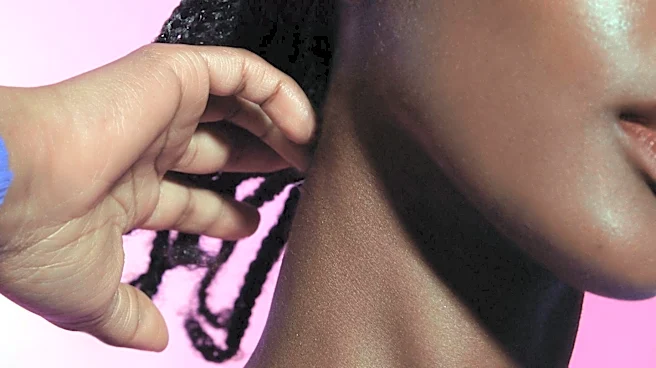
The practice of braiding, once considered a low-maintenance and budget-friendly hairstyle, has become increasingly complex and expensive. Black women, who often face societal pressures regarding their hair, are now dealing with rising costs and changing
beauty standards that have normalized intricate styles like boho, knotless, and butt-length braids. These styles can take over five hours to install and are becoming a necessity rather than a choice, as one in five Black American women aged 25-34 have been sent home from work due to their hair. The beauty industry, which profits from these social and economic anxieties, is under scrutiny for its role in this trend.
Why It's Important?
The rising costs and pressures associated with braiding reflect broader issues of hair discrimination and beauty standards that disproportionately affect Black women. This trend highlights the intersection of race, gender, and economic inequality, as Black women are often forced to spend significant amounts of money to meet societal expectations. The situation underscores the need for greater awareness and policy changes to address hair discrimination in workplaces and schools. Additionally, it raises questions about the beauty industry's role in perpetuating these standards and the economic burden it places on consumers.