



What's Happening?
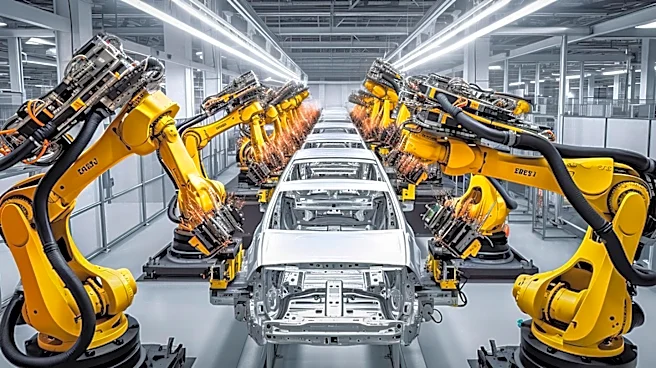
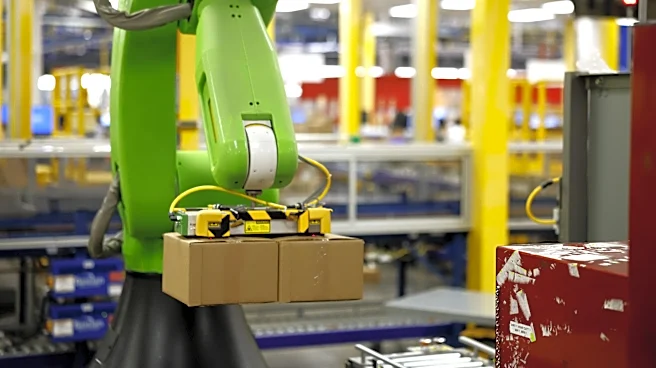
General Motors (GM) is reportedly targeting a 20% increase in the use of robots and automation across its North American factories by 2028. This initiative extends beyond GM's own operations, as the company is now requiring suppliers bidding on new contracts
to submit detailed plans for automating their own plants. GM will evaluate these supplier automation plans using a scorecard, and these scores will influence contract award decisions. The automaker is also developing some of its own robots, particularly autonomous mobile robots, at its Kokomo, Indiana plant, while continuing to purchase equipment from external vendors. This push for automation comes as GM faces increased cost pressures, with its 2023 UAW contract adding approximately $575 in labor costs per vehicle. UAW President Shawn Fain has expressed concerns that artificial intelligence (AI) and automation pose a threat to workers.
Why It's Important?
This strategic move by GM signifies a significant shift in the automotive supply chain, pushing automation down to its suppliers. It aims to enhance efficiency and reduce costs across the entire manufacturing ecosystem, potentially making the U.S. automotive industry more competitive globally. However, it also places a substantial burden on suppliers, who must now invest in automation to secure future contracts with GM. The emphasis on automation raises critical questions about job displacement and the future of labor in manufacturing, as warned by UAW President Shawn Fain. While GM states these technologies support manufacturing teams, the underlying cost pressures suggest a drive for labor cost reduction. The success of this initiative will depend not just on the deployment of robots but also on the sustained availability of automated cells, maintenance capacity, data reporting, and fallback plans for when automation fails, which are crucial aspects GM's scorecard should address.
What's Next?
Suppliers to General Motors will need to rapidly adapt their operations to meet GM's automation requirements, investing in new technologies and potentially restructuring their workforces. This could lead to a surge in demand for industrial robotics and automation solutions. The UAW and other labor organizations will likely monitor the impact of these automation efforts closely, advocating for worker retraining programs and protections against job losses. Other original equipment manufacturers (OEMs) in the automotive sector may adopt similar supplier automation scorecards, creating a ripple effect across the industry. The effectiveness of GM's strategy will be determined by whether its scorecard prioritizes long-term operational outcomes, such as sustained availability and maintenance capabilities, over mere robot counts. The integration of AI into these automation plans will also be a key area to watch, as suppliers incorporate vision inspection, predictive maintenance, and technician assistants.
Beyond the Headlines
GM's mandate for supplier automation highlights a broader trend of industrial transformation driven by technological advancements and global competition. This initiative could accelerate the adoption of Industry 4.0 principles throughout the manufacturing sector, emphasizing data-driven decision-making, interconnected systems, and smart factories. The challenge for suppliers will be not only in acquiring and deploying automation but also in developing the skilled workforce necessary to maintain and operate these advanced systems. This could create a demand for new types of technical roles and necessitate significant investment in training and upskilling programs. Furthermore, the ethical implications of widespread automation, particularly concerning job security and the potential for increased economic inequality, will become more pronounced. The automotive industry's approach to balancing technological progress with social responsibility will serve as a critical case study for other sectors facing similar pressures.