
What's Happening?
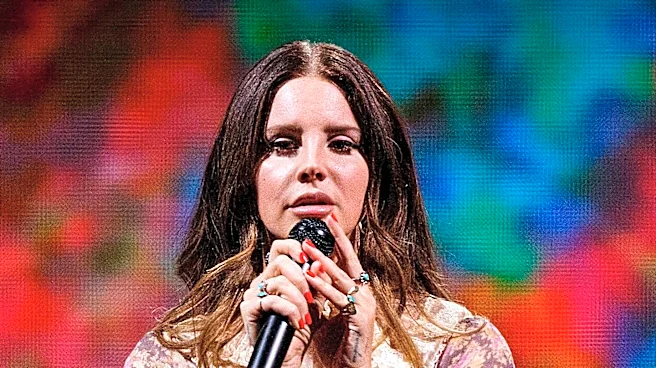
Lana Del Rey's music is being recognized for its unique ability to articulate profound emotional pain, transforming heartache and melancholy into art that deeply resonates with listeners. Her discography
is characterized by intricate lyricism and deliberate sound design, which immerse the audience in themes of grief and longing. This approach has secured her a distinct position in contemporary music, offering a space for the 'messy, unpolished parts of human experience' in an era often focused on curated perfection. Her songs are described as meditations on grief, portraying sorrow not as a weakness but as a profound lens for viewing life's fragility. The emotional architecture of her tracks reveals recurring themes, artistic techniques, and psychological depth that allow her somber verses to connect across generations.
Why It's Important?
Lana Del Rey's artistic impact is significant because her music validates and elevates emotional pain, transforming it into a powerful form of art. In a society that frequently dismisses quiet suffering, Del Rey acts as a 'poet-singer of rare grace,' demonstrating that honesty in sorrow can be a potent artistic force. Her work provides a 'sanctuary' for listeners who struggle to articulate their own feelings, fostering connection through shared emotional experiences. This cultural resonance is evident in her devoted global audience and the consistent ranking of her melancholic tracks on streaming platforms. Her influence extends beyond music, shaping aesthetics in fashion, film, and digital storytelling, where themes of melancholy are reinterpreted and celebrated as artful and worthy.
What's Next?
The enduring legacy of Lana Del Rey's music suggests continued cultural impact and academic interest. Her ability to transform personal pain into universal catharsis will likely maintain her relevance in the music industry and beyond. Future analyses may further explore the psychological and sociological aspects of her work, examining how her themes of love lost, failure, and the passage of time continue to resonate with evolving audiences. Her unique blend of minimalist piano melodies, sparse strings, and ambient soundscapes, coupled with reverb-drenched vocals and archival samples, will likely continue to influence emerging artists seeking to convey deep emotional narratives. The ongoing dissection of her lyrics and metaphors by fans on social media indicates a sustained engagement with her artistic output.
Beyond the Headlines
Beyond the immediate popularity and critical acclaim, Lana Del Rey's music delves into deeper implications regarding the human experience of sorrow and its artistic expression. Her work challenges the societal pressure for constant positivity and curated perfection, instead offering an authentic portrayal of vulnerability. This approach has ethical and cultural dimensions, as it encourages a more honest engagement with difficult emotions. By transforming personal agony into public art, Del Rey contributes to a broader cultural shift that values emotional authenticity and introspection. Her aesthetic, drawing from noir, Southern Gothic, and baroque romanticism, has become a motif that validates quiet sorrow, suggesting a long-term impact on how melancholy is perceived and integrated into contemporary art and culture.