
What's Happening?
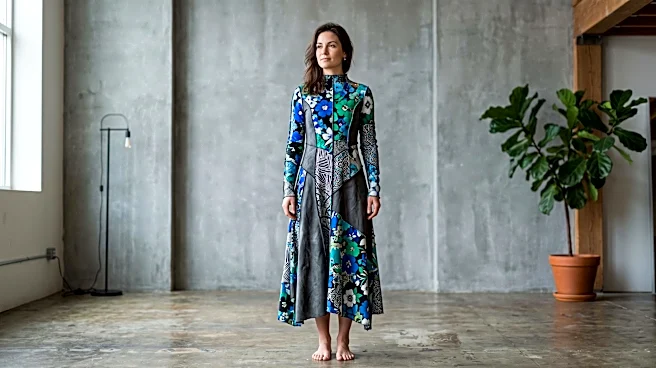
Desigual has officially launched its new capsule collection, 'Desigual designed by Ottolinger,' in collaboration with the Berlin-based fashion label Ottolinger. This limited-edition collection merges Desigual's
signature vibrant colors and prints with Ottolinger's avant-garde deconstruction techniques. The collaboration stems from Ottolinger's long-standing practice of acquiring and reinterpreting vintage Desigual pieces. The collection features garments that have been deconstructed and then meticulously reconstructed by hand in Desigual's Barcelona workshops, emphasizing the reuse of materials. A notable piece includes a long dress crafted from eight Desigual pants, with only five units available globally. The collection is now accessible on Desigual's website and in select stores, marking a strategic move for Desigual to refresh its image and appeal to a new generation of consumers.
Why It's Important?
This collaboration is significant for the fashion industry as it showcases a blend of distinct design philosophies and a commitment to innovative and sustainable practices. For Desigual, it represents a key part of its ongoing repositioning strategy, aiming to evolve its brand image and expand its international reach by partnering with a label known for its experimental approach. For Ottolinger, it offers an opportunity to introduce its unique aesthetic to a broader, more mainstream audience without compromising its artistic integrity. The focus on deconstruction and the reuse of deadstock materials highlights a growing trend towards circularity and conscious production within fashion, potentially influencing other brands to explore similar sustainable collaborations. This partnership also demonstrates how established brands can revitalize their appeal by embracing avant-garde design and tapping into the creative energy of emerging labels.
What's Next?
The 'Desigual designed by Ottolinger' collection is expected to continue its rollout, with availability on Desigual's website and in selected physical stores. The success of this capsule collection could pave the way for future collaborations between Desigual and other international designers, further solidifying its repositioning efforts. The emphasis on upcycling and deconstruction in this collection may also encourage more brands to adopt similar sustainable practices, potentially leading to a broader shift in fashion production methods. Both brands will likely monitor consumer reception and sales figures to inform their future design and marketing strategies. The collaboration's impact on attracting a younger demographic to Desigual will be a key indicator of its long-term success.
Beyond the Headlines
Beyond the immediate commercial aspects, this collaboration delves into deeper implications regarding the evolution of fashion design and consumption. The practice of deconstructing and reconstructing existing garments, particularly deadstock, challenges traditional notions of newness and seasonality in fashion. It promotes a narrative of transformation and longevity, where garments are not merely discarded but reimagined, adding new value and extending their lifecycle. This approach also highlights the artistic potential of upcycling, elevating it from a niche sustainable practice to a high-fashion statement. Ethically, it underscores a commitment to reducing waste and promoting resourcefulness, aligning with growing consumer demand for more responsible fashion. Culturally, it bridges the gap between avant-garde design and commercial accessibility, making experimental fashion more approachable and fostering a dialogue about creativity, sustainability, and brand identity in a rapidly changing industry.