





What's Happening?
JPMorgan has revised its price target for ArcBest, a multibillion-dollar integrated logistics company, from $171 to $158, while retaining a 'Neutral' rating on its shares. ArcBest, headquartered in Fort Smith, Arkansas, specializes in freight transportation
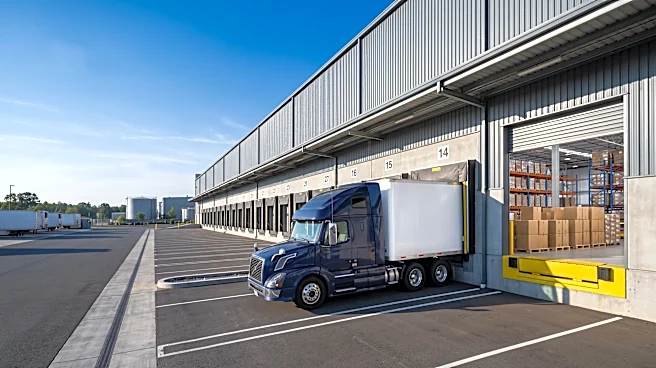
and supply chain services across North America and international markets. The company operates through asset-based transportation, primarily via ABF Freight, and asset-light logistics solutions. ArcBest's market capitalization stands at $3.0 billion, with approximately $2.8 billion generated from asset-based services and $1.5 billion from asset-light logistics, almost entirely within the United States. The adjustment in the price target comes as diesel costs take center stage in the freight industry, with the national price for diesel exceeding $6 a gallon and daily fuel spending hovering around $700 million. This environment is prompting closer scrutiny of how fuel expenses, freight mix, and network efficiency impact profitability for logistics operators like ArcBest.
Why It's Important?
The lowered price target and maintained 'Neutral' rating from JPMorgan signal potential headwinds for ArcBest and, by extension, the broader U.S. freight and logistics sector. Diesel fuel costs are a critical factor in the profitability of transportation companies, and the current high prices, coupled with significant daily fuel spending, directly impact operational expenses. For ArcBest, which runs a large U.S. less-than-truckload (LTL) and logistics network, fuel costs, freight mix, and network efficiency are direct determinants of its financial performance. The tightening in truckload capacity is pushing heavier shipments into ArcBest's LTL and managed logistics network, leading to higher weight per shipment and increased asset-based tonnage. While this shift can support revenue and earnings, the underlying concern is how fuel costs and other operational factors might decouple from pricing, affecting profit margins. Investors and stakeholders in the U.S. logistics industry will be closely watching how companies like ArcBest manage these fluctuating fuel costs and adapt their strategies to maintain profitability.
What's Next?
ArcBest will likely continue to focus on optimizing its network efficiency and managing its freight mix to mitigate the impact of high diesel costs. The company's ability to adapt its pricing strategies to reflect the changing fuel landscape will be crucial. Analysts and investors will be looking for signs of how ArcBest's internal operational shifts translate into its financial margins. The broader U.S. freight industry may see continued discussions around potential government interventions, such as tax holidays on fuel or permissions to use cheaper red-dyed diesel on highways, which could influence the cost structure for transport companies. ArcBest's upcoming earnings reports and management commentaries will provide further insights into how these challenges are being addressed and their impact on the company's outlook. The ongoing volatility in fuel prices will necessitate agile responses from logistics providers to maintain competitive pricing and service levels.
Beyond the Headlines
The situation with ArcBest highlights a deeper vulnerability within the U.S. supply chain: its heavy reliance on fossil fuels and the subsequent exposure to price fluctuations. Beyond immediate financial implications, the sustained high cost of diesel could accelerate the industry's push towards alternative fuel sources and more sustainable logistics practices. This could involve increased investment in electric or hydrogen-powered fleets, optimization of delivery routes through advanced analytics, and a greater emphasis on intermodal transportation to reduce reliance on trucking. Furthermore, the pressure on profitability might lead to consolidation within the logistics sector as smaller, less resilient companies struggle to absorb rising operational costs. The long-term shift could redefine the competitive landscape, favoring companies that can innovate in fuel efficiency and embrace greener technologies, ultimately impacting the environmental footprint of the U.S. freight industry.