


What's Happening?
A Japanese method for organizing coats, popularized by Marie Kondo, is gaining attention as an alternative to traditional hanger storage. This approach advocates for flat folding and vertical storage of garments, which can reportedly free up to 30% of closet
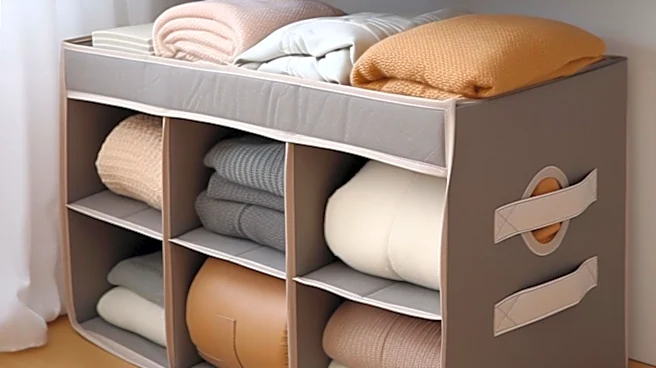
space. Unlike hanging, which can deform clothing and inefficiently use vertical space, the Japanese method involves carefully folding coats into compact rectangles that can stand upright in drawers, boxes, or closet compartments. This technique transforms a drawer into a 'textile library,' allowing for easy visibility and access to each item. The process requires specific folding steps to ensure the garment retains its shape and stability, such as closing buttons or zippers before folding, bringing sleeves inward, and folding the item into two or three parts lengthwise, depending on its thickness. Special considerations are noted for bulky items like down or synthetic fur coats, which may require adapted folding and breathable fabric covers.
Why It's Important?
This method offers a significant practical advantage for U.S. households, particularly those in urban areas with smaller living spaces where maximizing storage is crucial. The potential to gain up to 30% more closet space can alleviate common organizational challenges and reduce clutter, contributing to a more functional and aesthetically pleasing home environment. Beyond space-saving, the vertical storage approach improves visibility of one's wardrobe, making it easier to select outfits and potentially reducing impulse purchases of duplicate items. For the retail and home organization industries, this trend could drive demand for specific types of storage solutions, such as drawer dividers, specialized boxes, and compact shelving units designed to accommodate vertically folded garments. It also highlights a broader cultural shift towards more mindful consumption and organization, influencing how consumers approach their wardrobes and home management.
What's Next?
As awareness of the Japanese folding method grows, it is likely to see increased adoption in U.S. homes, especially as people seek efficient ways to manage their belongings. Home organization experts and influencers may further popularize the technique through tutorials and workshops. Manufacturers of closet systems and storage containers are expected to respond by offering products tailored to vertical storage, such as modular drawer inserts and specialized garment boxes. There may also be a rise in demand for professional organizing services that specialize in this method. Consumers will need to invest time initially to master the folding techniques and find appropriate containers, but the long-term benefits of increased space and improved wardrobe visibility are anticipated to drive continued interest. This approach could also influence future textile purchases, encouraging consumers to consider how new items will integrate into their organized systems.
Beyond the Headlines
The adoption of the Japanese folding method extends beyond mere tidiness; it reflects a deeper cultural influence on American lifestyle and consumption patterns. This method, rooted in principles of efficiency and harmony, encourages a more deliberate and respectful relationship with one's possessions. By making each item visible and accessible, it fosters a greater appreciation for what one owns and discourages the accumulation of unnecessary items. This aligns with broader trends in sustainable living and conscious consumerism, where quality over quantity and thoughtful organization are prioritized. The method also subtly promotes a sense of calm and order in the home, which can have positive psychological impacts on residents. It represents a shift from a purely functional view of storage to one that integrates aesthetic, psychological, and practical considerations, transforming the act of organizing into a form of self-care and mindful living.