







What's Happening?
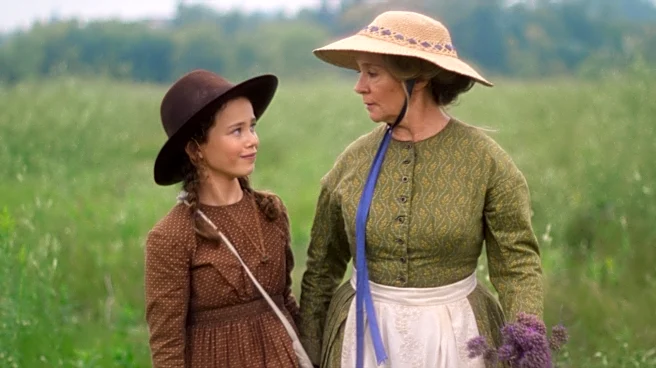
Netflix's reboot of 'Little House on the Prairie' has sparked controversy due to its modern interpretation of the classic series. Showrunner Rebecca Sonnenshine has addressed criticisms, particularly from conservative commentators, regarding the show's
'woke' elements. Sonnenshine argues that the term 'woke' has evolved and emphasizes the importance of social justice and equality in storytelling. The series introduces characters like Dr. George Tan, a Black doctor, and expands on the role of the Osage tribe, aiming to provide a more inclusive narrative. Sonnenshine highlights the historical context of the Ingalls' time in Kansas, shortly after the Civil War, and the challenges faced by characters like Dr. Tan and Emily, who encounter racism. The show aims to reflect the complexities of the era while staying true to the spirit of the original books.
Why It's Important?
The adaptation of 'Little House on the Prairie' reflects broader cultural debates about representation and historical accuracy in media. By incorporating diverse perspectives and addressing historical injustices, the show seeks to engage with contemporary audiences who value inclusivity. This approach may influence how other historical adaptations are produced, potentially leading to more nuanced portrayals of marginalized groups. The backlash also highlights the ongoing tension between traditional narratives and modern values, underscoring the challenges faced by creators in balancing authenticity with progressive storytelling. The show's reception could impact Netflix's future programming decisions and its approach to adapting classic literature.
What's Next?
As the series progresses, it will continue to explore the Ingalls' journey, moving to new locations like Walnut Grove, Minnesota. Sonnenshine plans to delve deeper into the complexities of iconic characters and introduce new storylines that reflect the evolving social landscape. The show's success or failure could influence Netflix's strategy in handling similar adaptations, potentially affecting casting, narrative focus, and marketing. Viewer reactions and critical reviews will likely shape the direction of future seasons, as well as the broader conversation about diversity and representation in media.