








What's Happening?
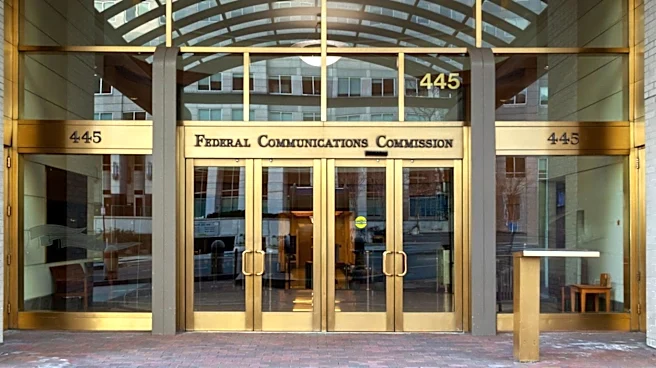
The Federal Communications Commission (FCC) has named Courtney Reinhard as the new chief of its Space Bureau. Reinhard is the third individual to lead the bureau, which was established in 2023 to oversee policy and licensing matters related to satellite
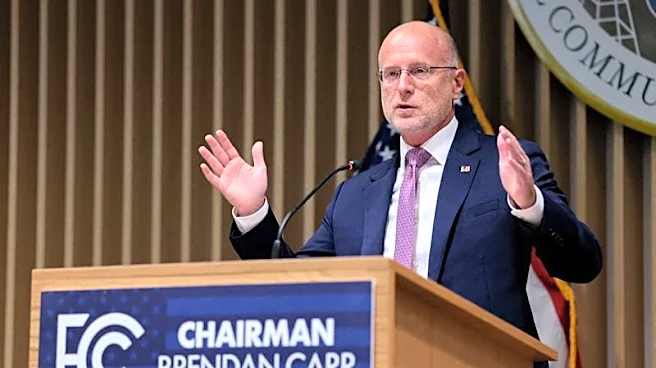
and space-based communications. She succeeds Jay Schwarz, who departed in August. Reinhard brings extensive experience from both the private sector, including a role as vice president of Federal Government Relations for Verizon, and the U.S. Senate, where she served as chief telecommunications counsel to Chairman Ted Cruz. Her previous roles at the FCC include chief of staff to former Commissioner Mike O’Rielly and legal advisor to former Commissioner Ajit Pai. FCC Chairman Brendan Carr highlighted Reinhard's experience and leadership as crucial for continuing the bureau's work in modernizing space rules and streamlining satellite licensing processes.
Why It's Important?
Reinhard's appointment is significant for the U.S. space economy, as the FCC's Space Bureau plays a critical role in regulating satellite activities and fostering innovation in the sector. The previous chief, Jay Schwarz, prioritized satellite licensing reform, leading to an 'assembly line' approach to streamline approvals and a reduction in environmental regulations for space activities. This modernization aims to boost America's competitiveness in the rapidly expanding space industry. The Satellite Industry Association (SIA) has applauded Reinhard's appointment, recognizing her commercial industry, spectrum policy, and regulatory expertise as valuable assets. Her leadership is expected to continue the FCC's efforts to create a more efficient and supportive regulatory environment for satellite operators, which is vital for the growth of satellite-based communication systems and Earth observation technologies.
What's Next?
Under Courtney Reinhard's leadership, the FCC Space Bureau is expected to continue its focus on modernizing space rules and further streamlining the satellite licensing process. This will likely involve ongoing efforts to reduce the backlog of applications and implement efficient regulatory frameworks that support the rapid deployment of satellite constellations. The industry will be watching to see how Reinhard leverages her diverse background in the private sector, Congress, and the FCC to navigate the complex landscape of space policy and regulation. Her tenure will be crucial in shaping the future of U.S. satellite communications, ensuring that regulatory practices keep pace with technological advancements and the increasing demand for space-based services.
Beyond the Headlines
The appointment of a new Space Bureau Chief underscores the growing importance of space as a critical domain for economic development and national interest. The FCC's efforts to streamline licensing and reduce regulatory burdens reflect a broader U.S. strategy to maintain leadership in the global space race. However, the rapid expansion of satellite activities also brings challenges, such as increased radio-interference and the growing issue of space debris. While the FCC focuses on domestic regulation, these issues have international implications, requiring coordination with global bodies like the International Telecommunication Union (ITU). Reinhard's role will involve balancing the promotion of commercial space activities with the need for sustainable and responsible use of orbital resources, a complex task with long-term environmental and strategic consequences.