








What's Happening?
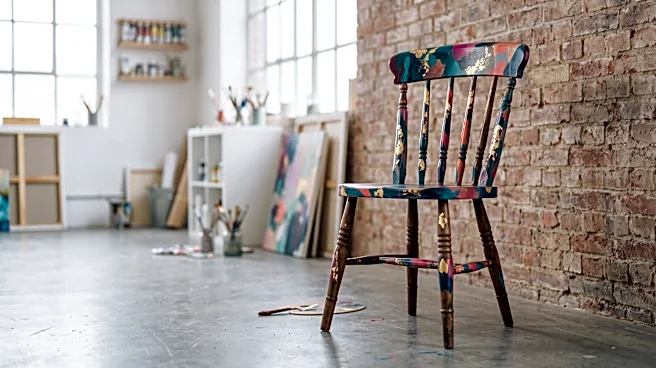
Denise Dmochowski, an artist based in Spring Lake, NJ, is transforming used chairs into unique works of art through upcycling. Operating from her creative studio, 308, Dmochowski applies collage and layering techniques, similar to those used in her paintings,
to these furniture pieces. Her artistic focus has historically been drawing and painting, with her work exhibited across the United States and Europe. The upcycled chairs are described as one-of-a-kind creations, reflecting her established artistic style. This initiative highlights a growing trend of repurposing and artistic transformation within the furniture and art sectors, offering unique pieces that blend functionality with aesthetic appeal. The studio, 308, serves as both a gallery for her unique furniture and fine art, and her personal creative space.
Why It's Important?
This development is important as it showcases a creative approach to sustainability and consumerism within the art and design industries. By upcycling used chairs, Dmochowski contributes to reducing waste and promoting the reuse of materials, aligning with broader environmental consciousness. For consumers, it offers an alternative to mass-produced furniture, providing unique, handcrafted items that possess both artistic value and a story. This trend can inspire other artists and designers to explore similar avenues, fostering innovation in sustainable design practices. Economically, it supports local artistry and small businesses, creating a niche market for bespoke furniture and art pieces. The integration of painting techniques into furniture design also blurs the lines between fine art and functional objects, potentially expanding the market for both.
What's Next?
The continued success of Denise Dmochowski's upcycled furniture could lead to increased demand for similar artistic repurposing projects. This might encourage other artists to adopt upcycling as a core component of their practice, potentially leading to workshops, collaborations, or even dedicated art fairs focused on sustainable design. The unique nature of these creations could also attract interior designers and collectors looking for distinctive pieces, further solidifying the market for upcycled art furniture. As environmental awareness grows, the appeal of such sustainable and artistic endeavors is likely to expand, potentially influencing mainstream furniture design and manufacturing to incorporate more eco-friendly practices and materials.
Beyond the Headlines
Beyond the immediate artistic and commercial aspects, Dmochowski's work taps into a deeper cultural shift towards valuing craftsmanship, individuality, and sustainability over mass production. The act of transforming a discarded item into a piece of art imbues it with new meaning and extends its lifecycle, challenging conventional notions of obsolescence. This approach can foster a greater appreciation for the potential hidden within everyday objects and encourage a more thoughtful consumption pattern. Ethically, it promotes responsible resource management and creative problem-solving, offering a tangible example of how artistic expression can contribute to environmental stewardship and a more circular economy. It also highlights the enduring appeal of unique, handmade items in an increasingly digital and standardized world.