







What's Happening?
The Sixth Circuit Court of Appeals has ruled that states like Ohio and Tennessee can regulate Kalshi's sports event contracts under state sports betting laws. This decision rejects Kalshi's argument that its contracts are 'swaps' and thus fall under the
exclusive jurisdiction of the Commodity Futures Trading Commission (CFTC), a federal agency. Senior U.S. Circuit Judge Julia Smith Gibbons stated that for an event to be 'associated with a potential financial, economic or commercial consequence,' it must be intrinsically linked to a financial outcome, such as a change in interest rates. The court found that Kalshi's sports event contracts only have 'downstream economic consequences' and are not intrinsically associated with financial consequences in the way required for them to be considered swaps under federal law. The panel, which included U.S. Circuit Judge Eric Clay and U.S. Circuit Judge Rachel Bloomekatz, further concluded that even if these contracts were swaps, the Commodity Exchange Act would not preempt state sports betting regulations, as these state laws primarily regulate sports betting and only incidentally affect designated contract markets like Kalshi. This ruling contributes to a growing divergence among federal appeals courts regarding the regulation of prediction markets.
Why It's Important?
This ruling by the Sixth Circuit is significant because it empowers states to regulate prediction markets, particularly those involving sports events, under their existing sports betting laws. This could lead to a fragmented regulatory landscape across the U.S., as different states and federal circuits adopt varying interpretations of whether these contracts are financial derivatives or a form of gambling. For Kalshi, a digital market that offers 'event contracts' across various fields, this means facing a patchwork of state-level regulations rather than a single federal framework. The company argues that this inconsistency makes it difficult for markets to operate efficiently and that Congress intended for a single federal regulator. The decision could impact the expansion and operational models of prediction markets, potentially increasing compliance costs and limiting their offerings in certain states. Conversely, states like Tennessee, whose Attorney General Jonathan Skrmetti called the ruling 'a great win,' view this as crucial for protecting consumers from the potential harms of unregulated wagering, emphasizing the need for safeguards in sports wagering.
What's Next?
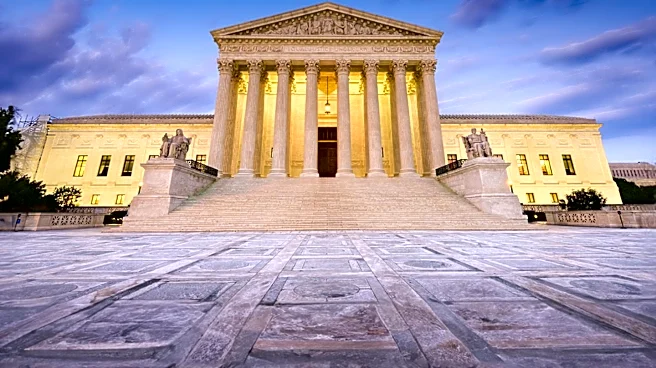
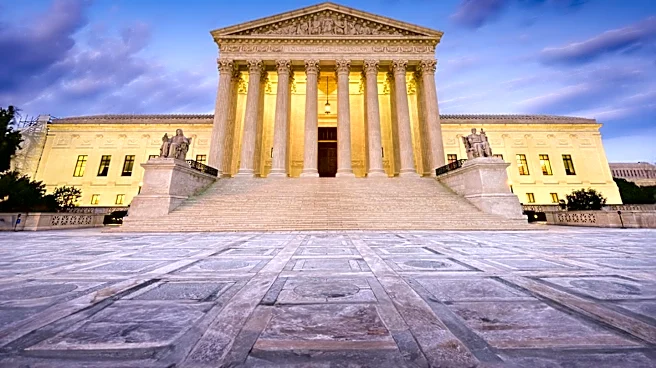
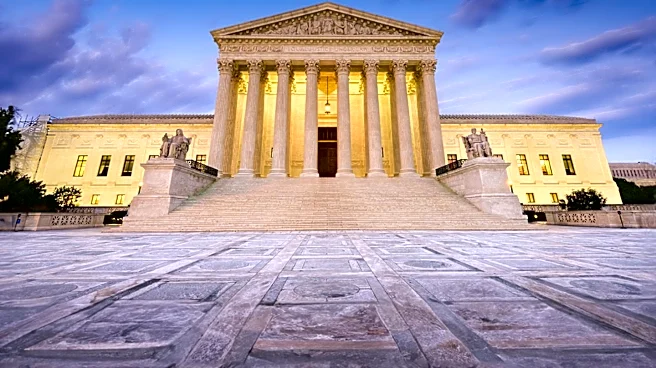
The Sixth Circuit's decision deepens the existing divide among federal appeals courts on the regulation of prediction markets. The Ninth Circuit previously ruled that Kalshi could be regulated under state gambling laws, aligning with the Sixth Circuit's stance. However, a divided Third Circuit panel ruled in April that the Commodity Exchange Act preempts state regulation of Kalshi's sports event contracts in New Jersey. New Jersey has since challenged this Third Circuit ruling, asking the U.S. Supreme Court to intervene and provide a definitive interpretation. The Supreme Court has not yet decided whether it will hear the case. The ongoing legal battles suggest that the regulatory future of prediction markets in the U.S. remains uncertain. Kalshi will likely continue to advocate for a unified federal regulatory approach, while states will continue to assert their authority to regulate what they consider sports betting. The ultimate resolution may depend on a Supreme Court decision or potential legislative action by Congress to clarify the regulatory framework for these novel financial products.
Beyond the Headlines
The legal debate surrounding Kalshi's prediction market highlights a broader challenge in regulating innovative financial products that blur the lines between traditional finance and gambling. The core issue revolves around whether 'event contracts' are sophisticated financial instruments (swaps) subject to federal oversight by the CFTC, or simply a new form of sports betting subject to state gambling laws. The differing opinions among federal courts underscore the complexity of applying existing regulatory frameworks to emerging technologies and market practices. This situation could set a precedent for how other novel digital markets are regulated, particularly those that allow participants to bet on outcomes of various events, from climate and economics to politics and pop culture. The outcome will have significant implications for consumer protection, market integrity, and the balance of power between federal and state regulatory bodies in the rapidly evolving digital economy. It also raises ethical questions about the nature of prediction markets and their potential societal impact, particularly concerning the commodification of future events.