



What's Happening?
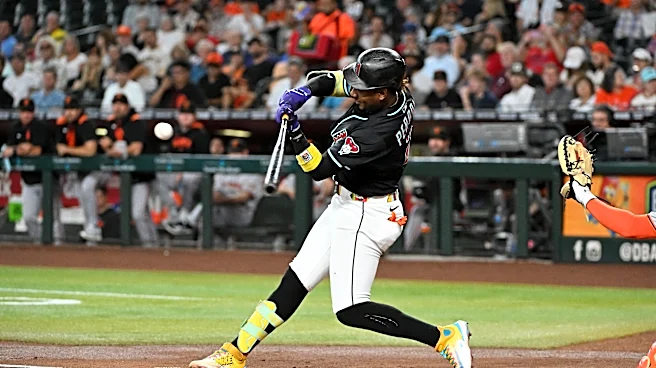
Diamondbacks shortstop Geraldo Perdomo has been identified as one of the most underachieving hitters in Major League Baseball during the 2026 season, according to Sports Info Solutions. His actual OPS (On-base Plus Slugging) of .747 was 112 points below
his expected OPS of .859, placing him second only to Corey Seager in this negative differential. This underperformance suggests that Perdomo's batted balls frequently resulted in outs due to strong defensive plays against him, with defenses saving 11 runs against his hits. Despite this statistical underperformance, Perdomo was involved in several key plays for the Diamondbacks, including an inside-the-park home run and a game-tying home run in significant games. His teammate, Tim Tawa, also appeared on the list of underachieving hitters, with an actual OPS 110 points below his expected OPS. The analysis by Sports Info Solutions calculates expected stats based on various factors including ball exit velocity, launch angle, hit location, and batter speed, providing a more comprehensive view of a player's potential output versus actual results.
Why It's Important?
The identification of Geraldo Perdomo as a significant underachiever in 2026 carries implications for both the player and the Arizona Diamondbacks organization. For Perdomo, this data highlights a potential disconnect between his hitting ability and his on-field results, suggesting that with better luck or adjustments, his performance could improve significantly. This could influence his approach at the plate or the team's strategy in positioning him. For the Diamondbacks, understanding that a key player like Perdomo is underperforming relative to his expected metrics can inform future roster decisions, player development strategies, and even trade considerations. If the team believes his underlying skills are strong, they might invest in coaching or analytical support to help him overcome defensive shifts or bad luck. Conversely, if this trend continues, it could impact his long-term role with the team. The analysis also underscores the growing importance of advanced analytics in baseball, providing deeper insights beyond traditional statistics to evaluate player performance and potential.
What's Next?
Looking ahead to the 2027 season, the focus for Geraldo Perdomo will likely be on bridging the gap between his actual and expected OPS. The Diamondbacks' coaching staff and front office will undoubtedly analyze the data from Sports Info Solutions to understand the specific factors contributing to his underperformance. This could lead to targeted training regimens, adjustments in his hitting approach, or strategic discussions about how to mitigate the impact of strong defensive plays against him. For fantasy baseball enthusiasts and analysts, players like Perdomo who show a significant negative differential between actual and expected stats often become 'buy-low' candidates, as there's an expectation that their performance could rebound closer to their underlying metrics. The team will also need to assess whether the defensive plays against Perdomo were an anomaly or a consistent trend that opponents are exploiting. His performance in the upcoming season will be crucial in determining his trajectory as a key player for the Diamondbacks.
Beyond the Headlines
The case of Geraldo Perdomo and other underachieving hitters highlights a broader trend in modern baseball: the increasing sophistication of defensive strategies and the impact of advanced analytics on player evaluation. Teams are now better equipped to position defenders based on spray charts and expected ball trajectories, which can significantly suppress a hitter's output even if their contact quality is good. This creates a dynamic where a player might be hitting the ball well, but consistently finding gloves, leading to a lower actual OPS compared to what their batted ball data suggests. This phenomenon raises questions about how to accurately value players in an era of hyper-optimized defenses. It also underscores the ongoing arms race between offense and defense, where advancements in one area necessitate adaptations in the other. For players, it means not only focusing on hitting the ball hard but also on hitting it where defenders aren't, a challenge that becomes increasingly difficult as defensive analytics improve.