






What's Happening?
Texas regulators have authorized a significant expansion of a natural gas-fired power plant intended to supply electricity to a $25-billion artificial intelligence data center development located near Abilene. The Texas Commission on Environmental Quality
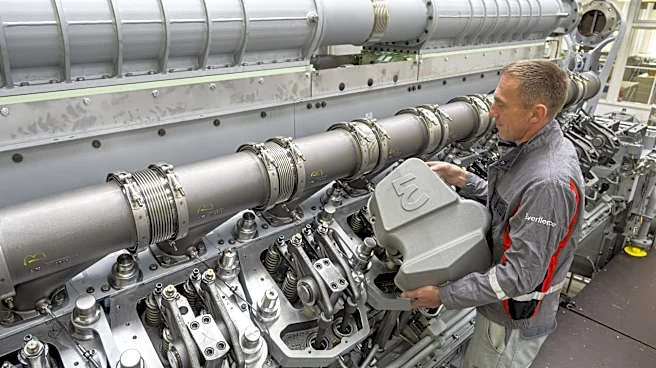
(TCEQ) approved the expansion on November 19, allowing Houston-based VoltaGrid to increase the generating capacity at its ABI-1 facility from 709 MW to 2,582 MW. This new permit replaces a previous authorization for 210 natural gas engines with one covering 620 engines. The power plant is designed to serve Frontier, which is Vantage Data Centers' largest campus globally, a planned 1,200-acre development in West Texas' Shackelford County. This $25-billion project will encompass 10 data centers, totaling 3.7 million square feet, and will provide 1.4 GW of critical computing capacity. Frontier is part of the Oracle and OpenAI Stargate initiative and will receive dedicated electricity from VoltaGrid's separately owned and operated generating facility. The authorization allows VoltaGrid to construct 10 independently operating power blocks using Jenbacher reciprocating engines.
Why It's Important?
This approval is crucial for the development of a massive AI data center infrastructure in Texas, signaling a significant investment in the state's technological and energy sectors. The $25-billion Frontier project, part of the Oracle and OpenAI Stargate initiative, underscores the growing demand for substantial power resources to support advanced AI computing. The expansion of VoltaGrid's power plant highlights the critical role of energy infrastructure in enabling large-scale tech developments. This project could position Texas as a major hub for AI data processing, attracting further investment and potentially creating numerous jobs in construction, technology, and energy sectors. However, it also raises environmental considerations, as the expanded plant is projected to emit approximately 10.63 million tons of carbon dioxide equivalent annually, along with other pollutants, which could draw scrutiny from environmental groups and impact local air quality. The project's scale also demonstrates the increasing energy intensity of AI technologies.
What's Next?
Following the TCEQ's approval, VoltaGrid can proceed with constructing the expanded power plant, which will involve installing 620 natural gas engines across 10 power blocks. State construction filings indicate Kiewit as the design firm for buildings at Frontier, with one data center alone estimated at $950 million and projected for completion by August 2027. VoltaGrid must submit an initial application under federal Title V operating-permit requirements before commencing operations. The project may face continued scrutiny from environmental watchdog groups, especially given ongoing federal litigation against Vantage and VoltaGrid concerning permitting for other gas-fired generating facilities in San Antonio. The lawsuit alleges that the companies proceeded under permits for smaller pollution sources rather than obtaining major-source authorizations. While this lawsuit does not directly involve the Frontier development, it indicates potential legal challenges and increased oversight for such large-scale energy projects in Texas.
Beyond the Headlines
The approval of this massive power plant expansion for an AI data center reflects a broader trend of increasing energy demands driven by the rapid advancement of artificial intelligence. The sheer scale of the $25-billion Stargate initiative, involving major tech players like Oracle and OpenAI, signifies a new era of infrastructure requirements for AI. This development could accelerate the debate around energy policy, grid stability, and environmental impact in regions hosting such large data centers. The reliance on natural gas for power generation for this project highlights the ongoing tension between technological progress and climate goals. Furthermore, the project's size and the associated power generation could influence local economies, land use, and resource allocation in West Texas, potentially leading to both economic opportunities and environmental challenges for the community. It also underscores the complex regulatory landscape for large industrial projects, particularly concerning environmental permitting and compliance.