




What's Happening?
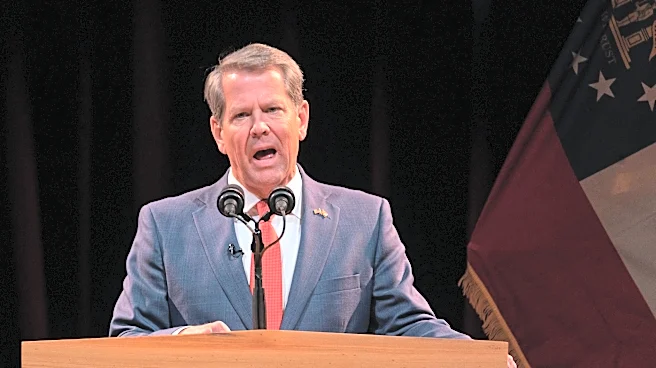
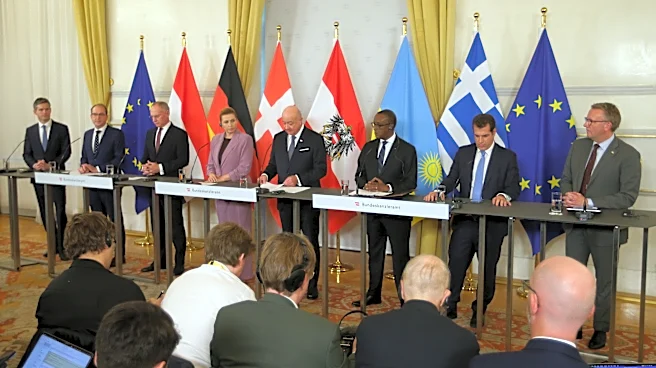
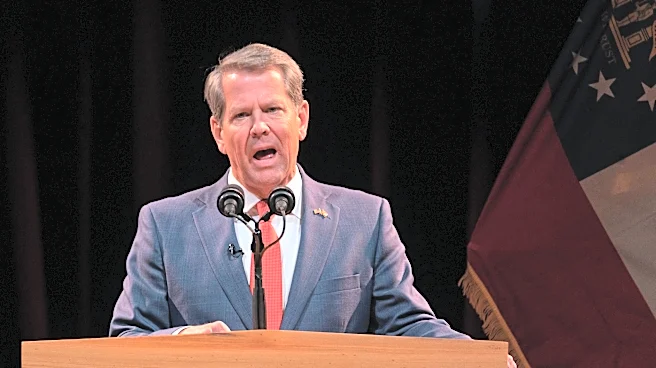
Governor Brian Kemp and First Lady Marty Kemp are leading an international economic development mission to Austria and Germany this week. The delegation, which includes representatives from the Georgia Department of Economic Development, aims to strengthen
existing partnerships and attract new investments to Georgia. The trip will focus on key industries such as mobility and global supply chains. Meetings are scheduled with companies that either currently operate in Georgia or are planning facilities in the state, as well as with high-ranking government officials in both European nations. Notably, the delegation plans to meet with Audi leadership to continue discussions regarding the company's planned investment in its North American manufacturing presence. This mission builds on decades of established relationships; Georgia's Europe Office has served Austria and Germany since 1973, contributing to significant bilateral trade and investment.
Why It's Important?
This economic development mission is crucial for Georgia's continued economic growth and job creation. Investments from Austria and Germany have historically been substantial, bringing over $2.1 billion and 7,680 jobs to Georgia prior to Audi's announced investment. German companies represent Georgia's second-largest source of foreign direct investment over the past decade, and Germany was Georgia's fourth-largest export market and fifth-largest trading partner in 2025, with total bilateral merchandise trade exceeding $1.3 billion. Strengthening these ties, particularly in critical sectors like mobility and global supply chains, can lead to further job opportunities and economic diversification within the state. The focus on manufacturing and logistics industries aligns with Georgia's strategic economic priorities, aiming to secure its position as a hub for international business and trade.
What's Next?
The immediate next steps involve the ongoing meetings and discussions between Governor Kemp's delegation and European companies and officials. These engagements are expected to foster new agreements and solidify existing commitments, potentially leading to further announcements of foreign direct investment and job creation in Georgia. The continued conversations with Audi leadership are particularly significant, as the German automaker's planned North American manufacturing plant near Macon is projected to create up to 4,500 jobs. The invitation for Governor Kemp to attend the Munich Security Conference in 2025 also signals ongoing high-level engagement, suggesting a sustained focus on international partnerships beyond this current mission. The long-term impact will depend on the successful conversion of these discussions into tangible economic projects and sustained trade relationships.
Beyond the Headlines
This mission underscores a broader strategy of U.S. states actively pursuing international economic diplomacy, often independent of federal foreign policy shifts. By directly engaging with foreign companies and governments, states like Georgia can cultivate bespoke economic relationships that are resilient to national political changes. This approach highlights the increasing importance of subnational entities in global economic affairs, as they compete for foreign direct investment and seek to integrate into global supply chains. The emphasis on long-term trust and personal relationships, as noted by Georgia Department of Economic Development Commissioner Pat Wilson, suggests a sophisticated understanding of international business dynamics that goes beyond transactional deals, aiming for enduring partnerships that benefit local communities and industries.