


What's Happening?
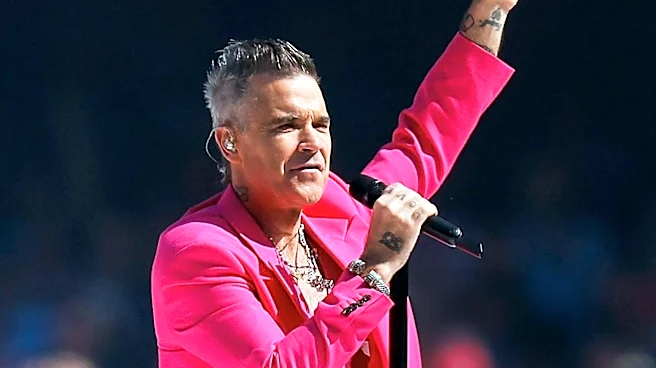
British singer Robbie Williams has publicly defended Olivia Rodrigo against allegations that her new Christmas song, 'take me home (4 christmas)', copied his 2012 hit 'Candy'. Rodrigo, 23, faced initial comparisons between her song and The Waitresses'
1981 classic 'Christmas Wrapping'. However, after listeners also noted similarities to Williams' track, he addressed the controversy. Initially, Williams posted a cryptic message on social media, which some interpreted as a subtle jab. He later issued a lengthy statement on Instagram, expressing his frustration with what he described as an "ambulance chasing" trend in the music industry where artists are frequently accused of plagiarism over minor similarities. Williams stated that he believes Rodrigo may have "accidentally stumbled across a musical echo" of his song and that he "couldn't care less" about potential copyright issues, emphasizing that genuine theft is different from accidental similarities. He concluded by calling Rodrigo "f***ing brilliant."
Why It's Important?
This incident highlights the ongoing challenges and sensitivities surrounding intellectual property and originality in the music industry. The increasing frequency of plagiarism claims, even for subtle resemblances, can stifle creativity and lead to costly legal battles for artists. Williams' strong stance against what he calls "ambulance chasing" reflects a sentiment shared by many in the creative community who feel that the current climate discourages artistic experimentation and collaboration. For Olivia Rodrigo, a young and successful artist, such accusations, even if unfounded, can impact her public image and creative freedom. The situation also underscores the power of social media in amplifying these claims, often before official investigations or legal processes can occur. This debate affects not only the artists involved but also the broader legal framework for copyright in music, potentially influencing how future musical works are created, shared, and protected.
What's Next?
While Robbie Williams has publicly dismissed the claims regarding his song, the broader discussion around musical originality and copyright in the digital age is likely to continue. This incident may prompt further conversations among artists, legal experts, and industry bodies about clearer guidelines for what constitutes plagiarism versus accidental similarity or inspiration. For Olivia Rodrigo, the public support from an established artist like Williams could help mitigate any negative impact on her reputation. However, the initial comparisons to 'Christmas Wrapping' by The Waitresses, where founding member Chris Butler reportedly approved Rodrigo's song, suggests that artists are increasingly proactive in seeking permission or acknowledging influences. This trend might lead to more transparent practices in music creation to avoid future controversies.
Beyond the Headlines
Beyond the immediate dispute, this event touches upon the philosophical debate about originality in art. In an era where music is globally accessible and influences are constantly exchanged, the concept of a completely unique melody or chord progression becomes increasingly complex. Williams' argument that "we all stand on the shoulders of people who came before us" speaks to the evolutionary nature of music, where new creations often build upon existing forms. The legal system, however, often struggles to differentiate between genuine theft and unconscious influence or mere coincidence. This tension between artistic evolution and legal protection raises questions about how copyright laws should adapt to the realities of modern music creation and consumption, ensuring both fair compensation for creators and the freedom for new artists to innovate without undue fear of litigation.