






What's Happening?
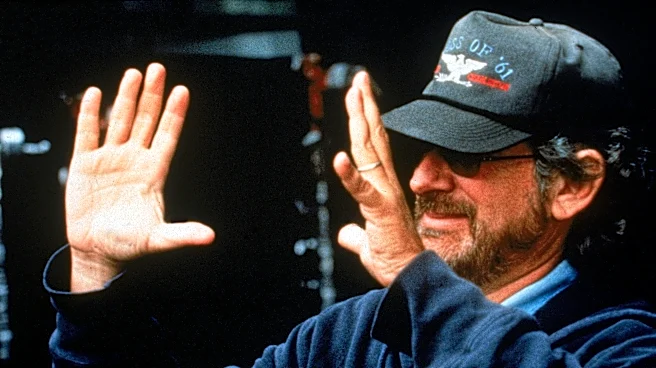
Renowned director Steven Spielberg has expressed regret over his decision in 1987 to step down from directing 'Rain Man' to fulfill a commitment to George Lucas for 'Indiana Jones and the Last Crusade'. Spielberg had spent a year and a half working on 'Rain Man' before
prioritizing his promise to Lucas and the studio to direct the third Indiana Jones installment. This choice led to Barry Levinson taking over 'Rain Man', which subsequently became a major critical and commercial success. 'Rain Man' went on to win four Academy Awards, including Best Picture, Best Director, Best Actor for Dustin Hoffman, and Best Original Screenplay. Spielberg openly admitted in 1990 that it hurt to see the film he left achieve such accolades, contemplating whether he should have disregarded his friendship with Lucas to continue with 'Rain Man'.
Why It's Important?
This event highlights the complex interplay between professional commitments, personal relationships, and career opportunities in the film industry. Spielberg's decision, driven by loyalty and prior agreements, ultimately led him to miss out on directing a film that achieved significant critical acclaim and box office success, earning $400 million and multiple Oscars. While 'Indiana Jones and the Last Crusade' was also a successful film, Spielberg's reflection underscores the potential for regret even in highly successful careers. It illustrates how choices made under pressure can have lasting emotional and professional impacts, shaping a director's filmography and personal sense of achievement. The scenario also demonstrates the fluidity of directorial roles in Hollywood, where projects can change hands due to various circumstances, leading to different creative outcomes and legacies.
What's Next?
While this specific event is a historical reflection, its implications continue to resonate within discussions about directorial choices and career paths in Hollywood. For Spielberg, his eventual success with 'Schindler's List' years later brought him the Best Picture and Best Director Oscars he had sought. The narrative serves as a cautionary tale for filmmakers and industry professionals about balancing personal obligations with potentially career-defining projects. Future decisions by directors may be influenced by such historical examples, prompting careful consideration of project commitments and the potential for missed opportunities. The story also reinforces the idea that even the most successful individuals can harbor professional regrets, contributing to a broader understanding of the human element in creative industries.
Beyond the Headlines
This anecdote delves into the deeper ethical and personal dimensions of professional decision-making. Spielberg's choice between friendship and a potentially groundbreaking film project reveals the pressures faced by individuals at the pinnacle of their careers. It touches upon themes of loyalty, professional ambition, and the subjective nature of success and regret. The 'what if' scenario surrounding 'Rain Man' prompts reflection on how individual choices can alter not only personal trajectories but also the landscape of cinematic history. It also subtly critiques the demanding schedules and contractual obligations within the film industry that can force artists to make difficult choices, sometimes leading to a sense of loss even amidst overall success. This narrative offers a glimpse into the personal cost of professional commitments in a high-stakes industry.