





What's Happening?
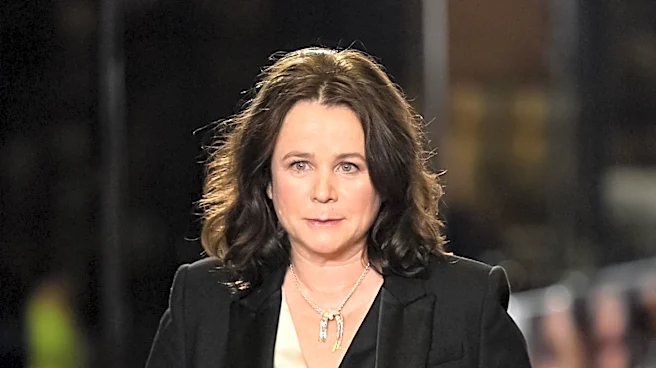
Actress Emily Watson has disclosed that her upbringing in a religious cult, the School of Philosophy and Economic Science, almost led her to decline her breakout role in Lars von Trier's 1996 film 'Breaking the Waves.' Speaking at the Sarajevo Film Festival,
where she received an honorary Heart of Sarajevo Award, Watson described the London-based organization as a 'cult' that advocated for conservative values and strict gender roles. She recounted being summoned and told not to take the role when the organization learned about the film's nature. This moment, she explained, caused a significant rupture in her life, leading her to walk away from the community she had grown up in. Watson credits acting with 'saving her life' and noted the stark parallels between her personal experience and the character of Bess McNeill, a young woman from a repressed religious community who embarks on a sexual journey that contradicts her moral guidelines.
Why It's Important?
This revelation offers significant insight into the personal struggles and formative experiences of a highly acclaimed actress, highlighting the profound impact of early life circumstances on an individual's career and personal development. For the entertainment industry, it underscores the challenges artists may face when their personal backgrounds conflict with professional opportunities, particularly in roles that challenge societal or religious norms. Watson's story also sheds light on the broader societal understanding of religious cults and their potential psychological effects, as she noted a growing comfort in discussing her past due to increased 'societal understanding' of childhood trauma. Her experience with 'Breaking the Waves' demonstrates how art can serve as a catalyst for personal liberation and self-discovery, even when it means confronting deeply ingrained beliefs and community pressures. The narrative also touches upon the evolving nature of awards campaigns, which Watson believes have become 'much more extreme' and commercially driven, contrasting with the 'pure' storytelling focus of festivals like Sarajevo.
What's Next?
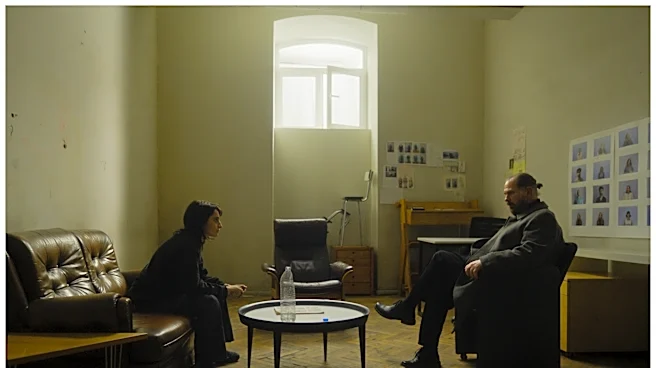
Emily Watson is scheduled to appear in the second season of HBO Max’s 'Dune: Prophecy' and will star in Mira Nair’s historical drama 'AMRI.' Additionally, she is set to feature in Mackenzie Crook’s directorial debut, 'Mars Express,' alongside Toby Jones, a film that will tell the real-life story of Colin and Judith Pillinger's mission to find life on Mars. Her continued work in diverse projects suggests a sustained and active career in the film and television industry. Her openness about her past may also encourage further dialogue about the experiences of individuals raised in restrictive environments and the role of art in processing such experiences. Her advocacy for working with more female directors also indicates a potential future focus on promoting diversity and inclusion within the industry, aligning with broader trends in Hollywood.
Beyond the Headlines
Watson's candid discussion about her past delves into the complex interplay between personal identity, religious upbringing, and artistic expression. Her description of the 'rupture' and subsequent 'incredible freedom' she experienced by defying the cult's directives highlights the profound psychological and emotional toll that such environments can exact, as well as the transformative power of self-determination. The fact that she kept her upbringing private for decades, even from co-stars like Stellan Skarsgård, speaks to the deep-seated defensiveness and fear of judgment that can accompany such experiences. Her observation that 'societal understanding' of childhood damage has evolved suggests a broader cultural shift towards greater empathy and openness regarding personal trauma. This narrative also implicitly raises questions about the responsibility of artistic institutions and the media in supporting artists who navigate complex personal histories, and how these histories can enrich their performances and contribute to a more nuanced understanding of human experience.