







What's Happening?
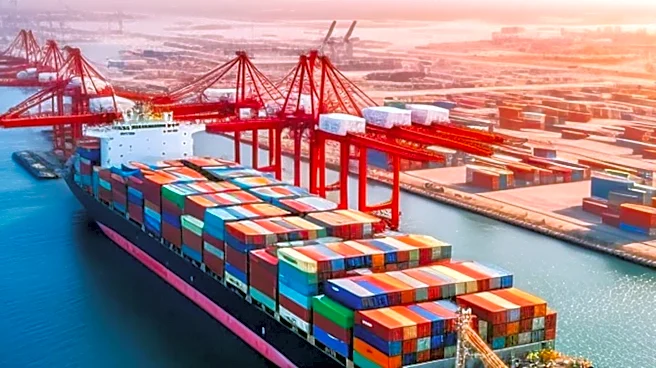
The Michigan Maritime Gateway, located at the Port of Monroe, is nearing completion and is expected to open next spring. This project, a decade in the making, will establish Michigan's first Safe Port Act-compliant international container terminal on the Great
Lakes. The gateway includes significant dock improvements and a new roll-on, roll-off dock designed for oversized cargo. According to Paul LaMarre, Port Director of Monroe and President of American Great Lakes Ports Association, the new container terminal is projected to attract an additional 18 to 36 international vessel calls annually, generating an estimated $18 million to $36 million in regional economic impact. The Port of Monroe aims to offer a faster and more cost-effective transportation alternative for containers to Europe, potentially cutting transit times by 14 days compared to East or West Coast ports. While Great Lakes ports traditionally handle bulk products like iron ore, coal, grain, and stone, the Michigan Maritime Gateway will enable the state to ship containers across its ports for the first time, serving a niche and high-value market.
Why It's Important?
The Michigan Maritime Gateway represents a significant economic development for Michigan and the broader Great Lakes region. By providing a direct international container shipping option, it diversifies the state's transportation infrastructure, which has historically focused on bulk cargo. This new capability can reduce logistics costs and transit times for businesses in Michigan and surrounding states, making them more competitive in global markets. The projected economic impact, including increased vessel calls and millions in regional revenue, underscores the potential for job creation and business growth. Furthermore, the project's emphasis on being Safe Port Act-compliant highlights a commitment to security and efficiency in maritime operations. This initiative could also alleviate some pressure on congested coastal ports, offering an alternative route for goods moving between the U.S. and Europe.
What's Next?
With the Michigan Maritime Gateway 97% complete, the next step is its anticipated opening next spring. This will mark the beginning of a new era for container shipping in Michigan, as the Port of Monroe starts receiving international container vessels. The success of this initial phase will be crucial in demonstrating the viability and benefits of direct container shipping via the Great Lakes. Stakeholders, including manufacturers, logistics companies, and international traders, will be closely watching the operational efficiency and cost-effectiveness of this new route. The project's long-term success could encourage further investment in maritime infrastructure across the Great Lakes, potentially transforming the region into a more prominent player in international trade.
Beyond the Headlines
The development of the Michigan Maritime Gateway signifies a strategic shift in how the Great Lakes region participates in global trade. Historically, the Great Lakes have been vital for domestic and regional bulk cargo transport. The introduction of international container shipping opens up new possibilities for high-value manufactured goods and specialized industries. This move could also foster greater economic integration between the U.S. industrial heartland and European markets, reducing reliance on traditional coastal gateways. The project's decade-long development also highlights the complexities and long-term vision required for major infrastructure initiatives, involving significant collaboration between federal, state, and local entities. This investment is not just about moving goods; it's about reshaping economic geography and creating new pathways for regional prosperity.