






What's Happening?
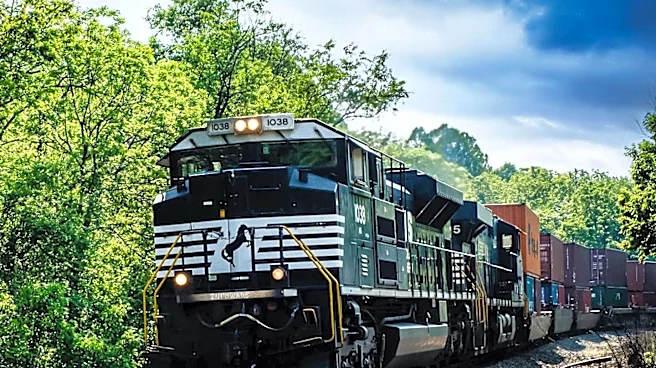
Union Pacific (UNP) and Norfolk Southern (NSC) are urging the Surface Transportation Board (STB) to continue reviewing their proposed merger, which aims to create the nation's first single-line, seamless coast-to-coast railroad. This push comes as Canadian
Pacific Kansas City (CPKC) requested the termination of the proceeding. The merger has garnered support from four rail labor organizations—SMART Transportation Division, the National Conference of Firemen and Oilers, the International Brotherhood of Boilermakers, and SMART's Mechanical Division—each having secured 'Jobs for Life' agreements with Union Pacific and Norfolk Southern, contingent on the merger's approval. These agreements offer career-long employment commitments and safeguards against involuntary furloughs for covered workers. However, the proposed combination is also facing scrutiny due to concerns about potential retaliation against stakeholders who voice objections. Union Pacific CEO Jim Vena issued a public statement apologizing for remarks made at a shippers conference where he alluded to rate hikes for those not supporting the merger, clarifying that his comments were an attempt at humor that was misunderstood.
Why It's Important?
This proposed merger holds significant implications for the U.S. rail transportation industry, potentially reshaping freight logistics across the country. The creation of a single coast-to-coast railroad could streamline operations and potentially increase freight growth, as argued by the merging companies. The 'Jobs for Life' agreements secured by labor organizations highlight a proactive approach to employment protection in large-scale corporate consolidations, potentially setting a precedent for future mergers in other sectors. These agreements aim to mitigate job insecurity often associated with such transactions, offering stability to thousands of railroad workers. Conversely, concerns from shippers and other rail companies like Canadian National (CN) about potential retaliation for opposing the merger raise questions about fair competition and market access. CN has filed proposed conditions with the STB to preserve customer options and expand its access in several Midwest markets, indicating broader industry anxieties about market dominance and potential anti-competitive practices.
What's Next?
The Surface Transportation Board (STB) will continue its review of the proposed merger between Union Pacific and Norfolk Southern, taking into account the flurry of public comments submitted by various stakeholders. The STB's decision will be crucial in determining the future landscape of U.S. rail freight. Key aspects under consideration include potential freight growth, employment protections, customer choice, and the ability of stakeholders to voice objections without fear of retaliation. Canadian National's proposed conditions, focusing on expanding its access in Midwest markets and acquiring specific Union Pacific lines, will also be evaluated as part of the regulatory process. The STB's rigorous review is expected to address these competing arguments and ensure a transparent assessment of the merger's overall impact on the industry and its consumers. The outcome will likely influence future merger strategies within the transportation sector and regulatory oversight of large-scale corporate consolidations.
Beyond the Headlines
The controversy surrounding Union Pacific CEO Jim Vena's remarks underscores the delicate balance between corporate advocacy for mergers and maintaining trust with stakeholders. His apology, while attempting to clarify his intent, highlights the heightened sensitivity around potential anti-competitive behaviors and the perception of coercion in major business transactions. This incident could lead to increased scrutiny of corporate communications during merger proceedings, prompting companies to adopt more cautious and transparent engagement strategies. Furthermore, the 'Jobs for Life' agreements, while beneficial for union members, could spark broader discussions about the role of labor unions in securing long-term employment guarantees during corporate consolidations, potentially influencing future collective bargaining efforts in other industries facing similar consolidation trends. The STB's handling of the retaliation concerns will also be a critical test of regulatory bodies' ability to protect diverse stakeholder interests in high-stakes corporate maneuvers.